Skip to content Joel 1:14 — Consecrate a Fast: A Pastoral Call to Repentance Nov 6 · 18 min ...more
Joel 1:14 — Consecrate a Fast: A Pastoral Call to Repentance
November 6, 2026 · 18 min
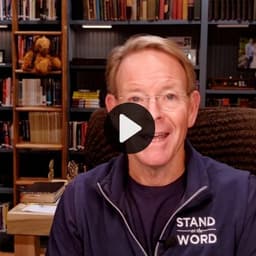
A pastor's reflection on Joel's summons to fasting and sacred assembly—an urgent call to humble prayer and seeking the Lord in times of trial.
Series Stand on the Word - Video On Demand November 6, 2026 · 18 min · Stand on the Word - Video On Demand
A pastor's reflection on Joel's summons to fasting and sacred assembly—an urgent call to humble prayer and seeking the Lord in times of trial. ...more Show the full description Show less A pastor's reflection on Joel's summons to fasting and sacred assembly—an urgent call to humble prayer and seeking the Lord in times of trial.
Series Stand on the Word - Video On Demand Support this leader Liking this video? Support this ministry.
Support this leader
Liking this video? Support this ministry.
Give
Support this leader Liking this video? Support this ministry.
93.8K followers
Family Research Council is serving in the kingdom of God by championing faith, family, & freedom in public policy and the culture from a biblical worldview.
93.8K followers
Comments No comments yet. Start the conversation.
Introduction to the Book of Joel 0:10 Good morning. Welcome to Stand on the Word. Thanks for joining me this morning as our journey takes us to the book of Joel this morning. Verse fourteen, chapter one, consecrate a fast, call a sacred0:22 assembly, gather the elders and all the inhabitants of the land into the house of the Lord your God and cry out to the Lord. Sounds like, good advice. So today we're gonna look at0:33 chapter one of the book of Joel and the name Joel means Yahweh is God. Now Joel is one of the most difficult books of prophecy to actually date because there are few clues in0:45 the chapter about when it was written. There are no kings or rulers that are mentioned, which is one of the ways that, these books are often dated. Conservative scholars sign... Assign an early date,0:57 around the time of Elisha, or Elijah and Elisha, somewhere in that time frame, which if that's the case, would make Joel one of the earliest, prophetic books, written prophetic books. You know, a lot of1:09 these are oral. Joel is one of those that was written. Now one reason that this view, is is held by conservative, scholars is that there's1:21 a phrase here in this book that's found prominently. In fact, it's found five times in, these three chapters and it's this, the day of the Lord. Now some scholars1:32 suggest that Joel actually coined this phrase and we're going to see it in other prophetic works. Other scholars point to the absence of idolatry as a focal point of the prophet1:44 as evidence of a later day, the after the, axilic period, after they returned from exile, when idolatry was no longer an issue for the nation.1:56 Bottom line is we don't know. So for now I've placed it first in our introduction, to the prophetic books because of its uncertainty, but also because it's a prominent example. We're making a shift right2:08 now As we move to the prophetic books, it's about how the prophets communicate. It's much different. The communication style is much different than what we have seen in the historical writings. There's a lot of2:20 poetry, a lot of vivid imagery, a lot of word pictures, a lot of analogies, you know, like we're gonna see here in the book of Joel. Locusts. It's an... It's, well,2:31 let me just... Let me... I don't wanna get ahead of myself, but we see a lot of these imageries that are very vivid and even apocalyptic in their description. Now, I've2:43 probably said this before, but for those who are new on the journey, I am a student in scripture. But I am not an expert on biblical prophecy. I don't hold myself out to be one. I'm gonna share with you, my thoughts2:55 based upon, years of study, as well as, kind of where it fits in with current events. But here's my goal is I hope that you will dig deeper into the word of3:07 God. That's why we're on this journey. I'm just a trail guide. The holy spirit is our teacher. So I would encourage you, especially as you get into some of these difficult passages that are heavily debated, to to3:19 approach them with humility and with prayer, asking the Holy Spirit, to guide you as you study. And and I would encourage you to, make use of some classic commentaries. I use Matthew Henry3:30 and a lot of others. I like the older ones. But there's always a lot of free resources available. One of the, sources that I use a lot, especially when I travel and I can't take my library with3:42 me, is, Blue Letter Bible online available. It's, I I use it. I support it. So that's Blue Letter Bible. Okay. BiblicalThe Multiple Horizons of Biblical Prophecy 3:54 prophecy has multiple horizons. We've touched on this before, but it's especially important as we get into the prophetic books. There is often a near fulfillment,4:06 a intermediate, and a future. It's like a mountain range, you know, from a distance, if you've ever been out west or, you know, you see these mountains are way far away and and it all looks kind of one dimensional. But4:18 as you get closer, you see one mountain up close and then there are more mountains in the distance and in the distance, and it just keeps going. Well, as we approach prophecy that has been partially fulfilled with total4:29 fulfillment yet to come, you know, we need to approach this with with prayer, humility, and an understanding of history as well. Right. As I mentioned, the term, the day of the Lord is now being introduced4:41 to us, which will be, echoed by subsequent prophets. The day of the Lord has three aspects, right? As we consider this to diggers, the historical intervention, It's the4:53 historical intervention of God into the affairs of man for the purpose of bringing about, some cases, punishment, correction, or judgment. It is, illustrative5:06 of events like locusts that are a part of a present judgment, but they are also prophetic warnings of the end time or eschatological judgment. Alright?5:17 So the the old seed that the day of the Lord that there's a... An immediate, but then it's also a picture of what is yet to come in the day of the lord. Now the... There's this eschatological.5:30 That's the future. It's, end times, understanding of the end times. The great tribulation, the second coming of Jesus Christ in the millennium, that is often5:42 referred to as the day is the lord. So it has multiple uses, but it is pointing, you you know, primarily to God's intervention in the affairs of mass. Now, here are the setting, we5:53 read here in in, Joel chapter one. The setting was a severe drought and an invasion of locusts, which were punishment for the nation's scent. Because there's this call to repentance that we'd see,6:06 within this chapter, or within the book. Now there's... Again, there's no references we see in many of the prophetic books about idolatry. There's just a prophetic warning of the nation's6:18 coming judgment and an illustration of the end times. So we see, kind of an immediate, intermediate, and a future. Verse one, chapter one. The word of6:29 Lord came to Joel, the son of Pethuel. Hear this, you elders, get ear all inhabitants of the land. Has such a thing happened in your days or in the days of your fathers? Now notice theThe Locust Invasion and Call to Teach the Next Generation 6:41 unprecedented nature of this desolation that was taking place. Nothing like it had happened before. That is a clue that it should not be shrugged off as just a net... Another natural disaster. The severity of the6:53 situation was designed to make it stand out and to get their attention. This is how Jesus prescribed the, the period of the tribulation. In Matthew chapter twenty four verse twenty one,7:05 it says, for then there will be great tribulation such as has not been since the beginning of the world until this time, no, nor ever shall be. So it it it stood7:17 out. It should have gotten people's attention. You know, some of the things that have occurred even this week should get people's attention. It's it stands out. It's not normal. Tell your children of it. Let your7:27 children tell their children and their children to another generation. I I I can't I can't pass over this. Teach your children. Warn them of the consequences of sin. But this passage also7:39 carries another message, and that is hope and survival. This would be a... There there would be a new day. The sun would rise tomorrow, and there would, they would have a future in the7:51 ore. And and and so that's a part of this, yes, judgment, but there's is we will see here in this chapter as we will see in all the prophetic words that the Lord is ready to forgive and restore. It will just8:02 return to him. Verse four, what the cutting locust left, the swarming locust has eaten. What the swarming locust left, the hopping locust has eaten and what the hopping locust left, the destroying8:14 locust has eaten. Therefore, different insects or locusts mentioned here. Now this is a description of what was literal, and it was an illustration of the prophetic. Four different bands of insects came8:26 through and devoured what the previous wave missed. No successive waves coming through its total destruction. But it was also prophetic in the armies that would come and invade and devour8:38 the land if we did not repent and return to the lord. Verse five. Awake you drunkards and weep and wail all you drinkers of wine because of the sweet wine for it is cut off from your mouth. Now, this8:50 is some scholars indicate that this is one of the, the the sins that's addressed here is intoxication. And we have... What what... When you9:01 reconsider, you know, what two activities are connected to, a discussion of judgment, there's idolatry, which is missing in here. And then we see in the prophetic words,Judgment on Drunkenness, Prosperity, and Empty Religion 9:14 drunkenness, which impairs judgment leads to moral and cultural decline of both another Northern and Southern Kingers. What that is, you know, when you, you think about intoxication,9:26 you think about excess, what is it that gives rise to that? It's often a symptom of material prosperity. You know, here wine is identified as9:38 the problem. And that's usually a sign that, you know, they, they get too much time on their hands. There's, they're intoxicated because they're given over to the luxuries and the prosperity of society. Of9:49 course, we could look at our society today. I mean, it's not just alcohol, but drugs. I mean, drug overdoses have become one of the leading causes of death and adults,10:01 opioids like Sentinel, are responsible for many deaths. Consider also how there's a push by the government to legalize certain drugs like marijuana. And even that is a big debate and and10:13 watch this is coming. And the legalization of psychedelic drugs, like LSD, those types of things. It... It's something you need to pay attention to10:25 looking at it in a live description. Alright. Verse six. For a nation has come up against my land powerful and beyond number, its teeth are like lion's feet, and it has fangs like a fangs of a10:36 lioness. It has leg waist, my wine, and splintered my fig, my vine, and splintered my fig tree. It was stripped off their bark and thrown it down. Their branches are made white. Lament10:48 like the virgin wearing sackcloth for the bridegroom of her youth. The grain offering and the drink offering are cut off from the house of the Lord. The priests mourned the ministers of the Lord. So the11:00 religious rituals, and this is another thing that we'll see in the prophets that they are often accused of, is that they had turned from God, but they continued their rituals. That religion continued, but the11:11 relationship with God was neglected. So the religious ritual ceases because they don't have the wine and the grain. I'm sorry, well, but I don't want this11:23 religious, religiosity. I don't want you going through the motions. I want you to walk in relationship with me. So he cuts off, what they need for their religious activities. Verse ten, the fields are destroyed. The11:35 ground mourns because the grain is destroyed. The the wine dries up and the oil languishes. Be ashamed, oh, tillers of the soil. Wail, oh, wine dressers for the wheat11:47 and the barley because the harvest of the field has perished. So the vine dries up, the fig tree languishes, the pomegranate, and, and the palm and the apples and all the11:59 trees of the field are dried up and the gladness dries up from the children of man. The nation is a mess. And there comes a point when you, when you have to realize you can't save your way out. Can't spend your12:11 way out. You can't create another program. You you're in a helpless state. And and and here's the right response. Everything that they had relied upon was taken away. Right?12:23 The economy, the prosperity, and even their religiosity was removed from them. And so what's the response? Look at verse thirteen. Put on sackcloth and lament, o12:35 priest. Wail, oh ministers of the altar. Go in, pass the night in sackcloth, oh ministers of my country. Because grain offering and drink offerings are withheld from the12:47 house of the Lord. Consecrate a fast, Call a solemn assembly. Gather the elders and all the inhabitants of the lands of the house of the lord your god and cry out to the lord.13:00 Notice who is to lead this. Okay. Look, this process is delivering this message to the spiritual leaders. This is by collective government. There's no mention of kings. So here's the, here's the13:12 fact, pastors, don't wait for your church. Don't wait for the mayor. Don't wait for the legislature. Don't wait for the president. You lead the people back to God in your community and your church. This13:24 was an unprecedented situation. The nation was on the ropes and it called for an, for unprecedented leadership from the spiritual leader. Verse fifteen, alas for the day, forThe Urgent Call to Repentance and Prayer 13:36 the day of the Lord is at hand. It shall come as destruction from the almighty. What they were seeing was a prophetic illustration of the day of the Lord that would come at the end of the tribulation. So there's, we're13:47 going to see here again, there was an immediate, these real locusts, but then we're going to see also here in this book, this was a picture of a coming military invasion,14:00 but it was also a picture of an illustration of the end time tribulation. Verse sixteen is not the food cut off before our eyes, joy and gladness from the house of our14:11 God? The seed shrivels under the clods, store houses are in shambles, barns broken down for the grain was withered. How the animal groans, the herds of cattle are14:23 restless because they have no pasture. Even the flocks of sheep suffer punishment. Sounds like climate change. Probably was. But the cause was not the methane of their camels, but the nation's14:35 sin. Right? All of creation suffers under the way of the sin of man. And it's, here's what God generally does. Whatever we put in14:47 the place of our worship, devotion, and trust to God, he takes away. He takes away those false gods, those idols that we lean upon until we are brought to14:59 a place where we have nowhere else to turn, but him. And then what's amazing as we read through scripture and as we continue to see even today because it's in the nature of man. Even though everything else is removed and15:11 we're given a choice of returning to God and he he is very merciful at saying I will restore, if you simply repent. Man is so stiff necked that he refuses. And15:23 look, verse nineteen, oh Lord, to you I cry out, for fire has devoured the open pastures and a flame has burned up all the trees of the field. The beast of the field also cry out to you. For the water brooks15:35 are dried up and fire has devoured the open pastures. The beast of the field cry out to God for mercy. May we cry out to God for mercy and return to15:47 hell. Father, thank you for your word. And, and Lord, I know that this is a... As we read through the Old Testament, this is the covenantal relationship between you and15:59 the, the, the nation of Israel. But Lord, we know this is preserved for us as the, the new Testament tells us that this is here for our instruction edification. We look for these16:11 principles and how we are to apply them to our lives. And so father, as you have poured out your spirit, Lord, through the, through the death, burial, and16:23 resurrection of Jesus Christ and becoming the Holy Spirit, may we walk in the power of that in relationship with you. And Lord, you pray for our nation, that those things that have been, that we've rested upon trusted16:34 in that are counter to you, that Lord, we, we embrace you. Lord, I pray for that consecration that Lord, that we would return to you wholeheartedly and that Lord, we would serve you. Doesn't mean we ignore what's16:46 happening around us. We're involved in it as a outgrowth of our relationship and commitment to you being salt and light, providing hope for those around us, Lord.16:58 But our hope that we provide for others, the encouragement we give to others comes from our hope that is in you, that is eternal. So, father, guide us this day. I pray for all those on the journey,17:10 encourage them, strengthen them. And may they see you at work in their lives. Give us the eyes to see what you're doing all around us and give us joy17:23 and peace. We pray in Jesus name. Amen. All right. Thanks for joining me this morning. And until next time, keep standing on the word.17:33 Today's study comes from the stand on the word Bible reading plan available for free at frc dot org slash bible. By following along in just a few minutes a day, you17:45 can read through the entire Bible in just two years. Learn more and request the free reading guide at frc dot org slash bible.In this video 0:00 Introduction to the Book of Joel3:53 The Multiple Horizons of Biblical Prophecy6:35 The Locust Invasion and Call to Teach the Next Generation9:04 Judgment on Drunkenness, Prosperity, and Empty Religion13:31 The Urgent Call to Repentance and Prayer




Comments
Keep it kind. Comments are public.