Skip to content Interview With Dr. Richard P Klucznik Part 2 Dec 5 · 29 min ...more
Support this leader Liking this video? Support this ministry.
Support this leader
Liking this video? Support this ministry.
Give
Support this leader Liking this video? Support this ministry.
56.8K followers
Nina and Michelle, are best friends with a passion for the Lord. They bring uplifting conversations, encouragement, and shared personal stories of overcoming and victory straight to your screen.
56.8K followers
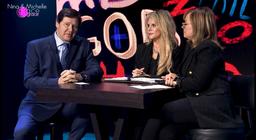
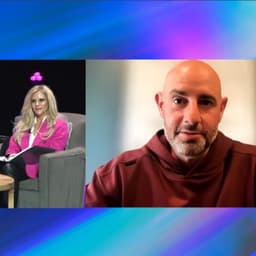
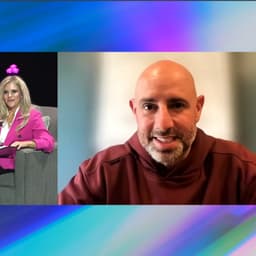
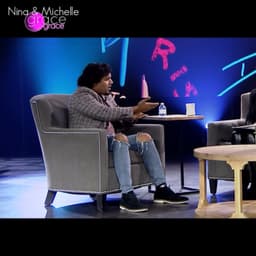
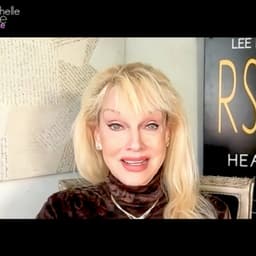
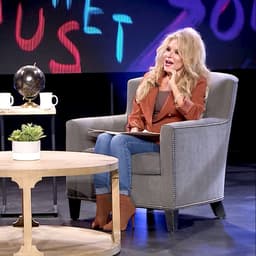
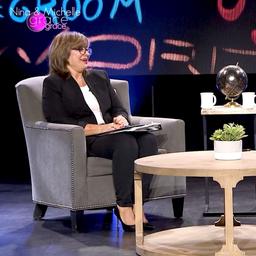
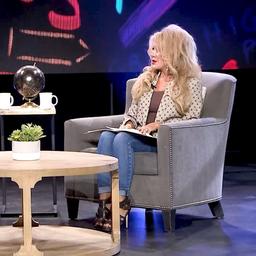
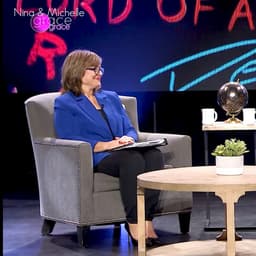
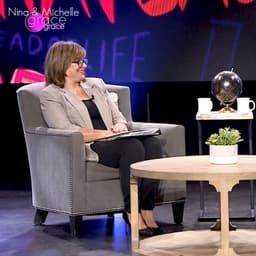
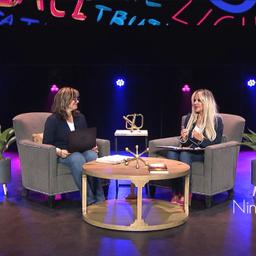
Understanding Strokes: A Medical and Spiritual Perspective 0:02 We wanna honor God because He sees everything.0:10 You were born with a plan and a purpose. He's the God of all things possible. He's the God of all0:22 miracles.0:52 Welcome to Grace Grace with Naina Michelle. I'm Michelle Humphreys.0:56 And I am Naina Keegan. Welcome to the broadcast today. We are so excited that you joined us because we all know that God wants us all to live in abundant health. And so we have a1:08 wonderful guest. He just happens to be my husband. This is doctor Richard Klesnick, and I will let you do the intro, Michelle.1:15 Well, the intro is very impressive, and I have been to their home and seen all of his degrees. It's it takes an entire office. So get ready.1:28 Richard doctor Richard Klesnick is from Worcester, Massachusetts. He graduated, from the University of Massachusetts, summa cum laude, and then went to the Air Force to,1:40 get his medical degree. He is, he is also he's he has written a hundred and 8 publications, 1201:52 invited guest lectures, and he's currently the CEO of neurointerventional consultants. He recently did a surgery live before,2:04 basically, the world of neurointerventional surgeons from Paris. So this is a very well credentialed guest we have even though he is Nina's husband. Right?2:16 And he went to Tufts Medical School, so we gotta throw that in there.2:19 So he is amazing. He really is. So welcome, Richard. Thanks for being on the program. We wanna talk about strokes with you.2:26 Well, thank you. Yeah. I went to Tufts Medical School, but I joined the Air Force to pay for it. So that's that's Smart guy.2:32 Smart guy.2:33 In the Air Force. So, 1 of the things we wanna talk about today is an important subject, and that's stroke. It's it's it is important because there's 700000 to 750000 strokes per year in the2:45 United States, 15000000 per year worldwide with 6000000 people dying. And it's the number 1 cause of disability in the United States, and, it's probably 1 out of every 62:56 people in the world who have a stroke, especially with aging populations. So first of all, I have to say, what is a stroke? Well, the 2 different types of stroke, 1 is a bleeding into the brain, and that's usually caused3:08 by a rupture of a aneurysm, which is like a a bubble on a blood vessel. But the more common is what we think of is a typical stroke, which is a clot that ends up in a blood vessel blocking the blood vessels to the3:20 brain. And most of the time, it's coming from an abnormal heart. There's rhythm or it can come from, down below and you have disease in the neck that's narrowing the artery. So any place that could3:31 potentially form a clot, it shoots upstream and blocks the vessel to the head. And when that does, once it blocks the blood vessel to the brain, we're losing about 1800000.0 neurons per minute once the3:43 blood flow is cut off to the brain. And every hour that the flow is cut off to the brain, your brain ages about 3.6 years. So if you're3:51 Oh my goodness.3:51 Without blood flow for 4 hours, your your brain is already aging, you know, roughly 16 years at that time.3:57 Oh my goodness.3:58 So there was not much we could do many years ago, but a a few years ago and we've always been working on ways of trying to dissolve the clot. They came out with a clot busting drug, but that doesn't work for the big4:10 clots. That works for small ones. Mhmm. And finally, there came a time where they devised what we call a stent on a stick. It looks like a stent, but you go from the blood vessels in the groin4:21 through the arteries, and you go all the way up into the blood vessel in the head, and you pull the clot out. There's also a device, basically, that acts like a suction device, a vacuum cleaner that you can get at this4:32 tube up there and apply suction. And if you can apply that suction and get the clot or pull the clot out, you give people a fighting chance to survive the stroke. And, not only survive, but4:43 maybe just get back to normal if if possible. We've had great successes with doing that.4:48 How many hours after this person is discovered, you know, because a lot of times people have a stroke and no one's around or or whatever. Can you bring them back, if5:00 they've, you know, like you said, over time, the time is brain. I've heard you say that.5:06 Time is brain. So you have about 6 hours of working time. We're stretching that out more and more depending on where the clot is, but the average is the people will do best if you can get to them within 6 hours.5:18 Okay.5:18 And so, we're trying to work nationwide and basically state by state wide to get EMS people to get, stroke patients. First of all, the EMS people have to recognize that they're having a stroke and not5:30 some other problem, and then they have to get that patient into an ambulance and get them to the best hospital that can treat the stroke. Not the nearest 1, because most EMS will drive to the nearest hospital, but drive5:42 and go to the nearest 1 that has the capabilities for what we do is to be able to pull the clot out. Not every hospital can do that.5:48 Let me let me but by law right now, as I understand it, the the EMS people, the ambulances are required to take the person to the nearest6:00 facility, whether it's a level 1 stroke trauma center or not. Right? And so that's what you're trying to get the laws changed. So because once they're there, they can't always treat everything and6:12 then the patient has to be shipped again or go by ambulance and get sent to a level 1 stroke center before and so, again, a lot of time is wasted, a lot of brain, has been6:23 affected by this point. And so that's, you know, that's, you know, we're saying, at 1 point you were telling me that it's very key that people would know and pre pre understand6:35 and know where their level 1, stroke centers are so that you could even take if a family member was having a stroke, take them there yourself.6:47 Yes. Take them there yourself. Or if you if you know of other places, you can request the ambulance to take them to a particular hospital. You may know more than the EMS people. So say I know that this hospital treats6:58 strokes, and I want them to go there. It's happened before with some other PI, I probably won't name names, but it's happened before where the family member and the wife had a stroke, and they went to a medical center7:10 that couldn't treat very well, but then they did their own research. And when the husband was having a stroke, the daughter said, no. Drive to this hospital where they got treated and recovered fully. So And he7:20 fared much, much better.7:22 Much better. So there's a way of looking for these, The Society of Neurointerventional Surgery, which I was the president of, a few years ago, has a website, and you can look at the website of the physicians who are7:34 in the state that do what I do. They're all the endovascular or neurointerventional people. And so it's a list of those people. And if you look at those, you can find out and plot out where those medical centers are7:44 ahead of time.7:45 What are the signs? How do you know? Because how how would what's the difference from, like, say a bad headache or you're having just issues, how do you know if someone's having a stroke?7:55 So we use a mnemonic, it's called BEFAST, b e f a s t. So BE is balance. Somebody's walking and all of a sudden they're losing their balance that they're not used to. Eyes, if their eyes are now all of a8:07 sudden changing, a disconjugate, and you're looking at them and something weird is going on. Face, facial drooping is a big sign. We say, you know, arm basically, the arms are weak, the strength8:19 overall, and then time. Time is brain. So it's basically, it's B. F. A. S. T. So anytime you have especially it's it's speech. That's what the s stands for, speech. Mhmm. We've had a lot of people who had just been on a8:30 phone call with a loved 1, and all of a sudden, they started talking gibberish.8:33 Right.8:34 They they had to call 9 1 1 immediately.8:37 Wow. Well, we're gonna come right back, and we're gonna go over each 1 of those things again so you know way more about what the signs are of a stroke. Stay right there.8:46 The world needs to be reached with the message of Jesus. And that is the mission of Grace Grace with Nina and Michelle, to see people's lives change with the saving power of Jesus Christ. When8:58 you donate to Grace Grace Ministries, you're also reaching orphans and the underprivileged throughout the world, as well as the United States. The Bible says that when we help the least, the forgotten and the overlooked,9:10 we have done something for Jesus himself. Will you be a part of what God is doing to help those in need and those who are hungering to hear the real message of Jesus? Give today by logging on to9:22 nainaandmichelle dot com or text the word give to 3 2 5 6 0 3 3 3 5 4. You can also send in a check to 63 15 b FM 14 88 Road, number9:33 1 22, Magnolia, Texas 7 7 3 5 4. Grace Grace Ministries is a 5 0 1 c 3 charitable organization. Gifts are tax deductible, so join us in the great commission today. Give9:45 now.9:49 Welcome back to Grace Grace with Naina and Michelle. Today, we are discussing strokes and how you know and if if if a loved 1 is having 1 and what to do. We have our expert here, doctor Richard Klesnick,10:01 who's explaining it all. So Yes.10:04 And we were just going over the signs of a stroke, and we had a a quick end to our segment. So would you go over those 1 more time?10:14 Yeah. So we use a it's a demonic b fast, and it really came more of a you know, we thought about this during the COVID because people aren't, you know, they're not with their family members. They're isolated and stuff.10:26 So a lot of it became trying to get out, to the family members to learn what the signs are because now we've had people on the phone with a loved 1 and just by talking on the phone, they knew that they're having a10:37 stroke. So it's be fast. Balance, if you notice that a loved 1 is is all of a sudden changing in their gait or walking or losing of we've had patients that started walking toward the wall, leading up against the wall.10:49 As you look at their eyes, if all of a sudden their eyes are doing weird funny things, you that may be a sign of a stroke. Face, the facial droop is a big sign of stroke. So you just see 1 side of the face may be11:00 asymmetric, drooping lower than the other side. We say arm because, you know, trying to pick up a coffee cup or something, if all of a sudden the coffee cup falls, so your arm is weak. S stands for speech, when you start11:11 losing speech, just having difficulty speaking. And that was a big 1 for people who are on the phone with a loved 1, all of a sudden they start speaking gibberish, they said immediately they had to call 9 1 1. And time,11:21 t is time. Time matters. Time is brain.11:24 Well and time is the difference between a lifelong disability and going back to normal. Right?11:33 Yes. Yeah. The quicker we can get the clot out and try to treat them, the better the recovery, the better off they they may end up. So time really, really matters when it comes to a stroke. It's we're trying to get it11:45 to a we hadn't thought about this previously. You know, the cardiologist always had it down pat. They had what's called STEMI, which is, you know, well, I will tell you what the STEMI stands for. But when you heard STEMI11:56 coming into the bird's room, everybody jumped all of a sudden. There was basically a heart attack coming and everybody started moving quick. And we never had that lingo before until we started thinking about it as a12:06 heart attack. And then we started getting the word out. Basically, this is a heart attack of the brain, and you have to move fast.12:12 Right.12:12 So we came out with a kind of a mnemonic for that, which is ELVO, which is emergent large vessel occlusion. Mhmm. We tried to get Elvis12:20 through e12:22 l v I s, emergent large vessel ischemic stroke, but we thought we'd be sued by the Elvis Presley Foundation. Probably would.12:28 So that was something that Elbow.12:31 Yes. I can't tell you how many times, like, you know, in the middle of the night, elbow coming in, like, he's getting up, he's having to go treat someone in the hospital that was coming in with a stroke because, you12:42 know, it's very, you you just need to know what to do. People need to know what to do if, in fact, your loved 1 is going through these types of of symptoms.12:54 So it's it's a there's a lot happening right now in the stroke world.12:58 So And we know that the Lord has used you because you've done you've you've basically helped save around 30000 lives. You've done that many surgical procedures. Correct?13:10 Yeah. It probably didn't save that that many13:12 lives. Right.13:13 Strokes are they're sometimes we do several a day, but not13:17 They're not always probably not many. Deadly as far as life saving. But, yes, that many surgeons.13:22 It's so impressive. And and I know that you're a praying man. So tell us give us an example of how, you know, you heard from the Lord or the Lord intervened during13:34 1 of your procedures.13:36 Well, there's, the the kind of the funny thing in our lab is we have this little duct that sits on the on our little counter, and the history of that little duct was that when we were doing,13:48 a procedure to prevent strokes, if you're trying to put a stent in a in a carotid, you had the patient hold a duck in their hand on the opposite side. So they would just squeeze a duck so you knew that they weren't13:58 having a stroke. We got so good at it that we didn't have to use the duck anymore, but the duck stayed on the counter and before every procedure, I walk over to the duck and I tap the duck. And people just thought that14:10 was kind of a funny thing to do, but in reality what I was really doing was I would say God help me on this procedure.14:16 So it14:16 was my kind of little call, was I squeeze, I'm squeezing the duck, God guide my hands, and I would go sometimes go into the other room. You have 2 rooms, I'd go into the other room and say, God, guide my hands. Let me14:28 help this patient, you know, for the bigger procedures, but especially every stroke. Before every stroke, I would I would say, God, help me help this patient.14:36 I would always get the text and the call too. I'm heading in. I'm going in. You know, please pray. But also, you have, prayed with so many families. Like, so if you really think about how14:48 God answers prayers and how he is ultimately the great physician, but he uses, you know, wise wisdom and doctors to to do things. And and and I always think about these15:00 people who are in the the waiting room praying for a miracle, praying for their their loved 1, And you have been able to to pray with many families, but also,15:12 you know, God using you in in a to answer the prayers of these people when when you can go out and say they have come through. They're fine, they're gonna be okay.15:24 And so, you know, that's been but I know you had a a godly encounter on the monitor 1 time. Do you wanna share that?The Impact of COVID-19 on Stroke Incidence 15:32 Well, probably, let me just first talk about the the families. Before I was saved, I wouldn't have done that, I wouldn't have prayed with families. It was only when I was saved that I felt15:44 comfortable, and then, and people would say, would you pray with us,15:48 would you15:48 pray with me? And then, then I would, I would actually join hands and pray with them, and I didn't feel uncomfortable anymore doing that. Mhmm. So the the first thing was just being saved, I wasn't I was raised Catholic15:59 and16:00 Mhmm.16:00 I wasn't saved, so I didn't have that id be, willing to do that, until then. So then I was comfortable praying with families and even afterwards, you know, if they came to the waiting room or whatever, I'd16:12 be I'd be comfortable praying with them. And then again, as I said, you know, before every procedure, I I would pray and say, please God help me. Help this patient. Don't let any complication. Don't let me16:24 hurt this patient. So it started all with being saved first.16:28 Right. Wow.16:29 We all need a praying doctor in our16:31 lives, like, you know Definitely.16:33 It's like that's, you know, ultimately, you know, we can't do anything without God. You know, apart from God, we can do nothing, and so Well, I16:42 know it's so comforting. I I remember having a surgery, and as they were about to they had just injected me with the anesthesia, and I said, I changed my mind. And the guy goes, but God brought you here. And16:54 I was like, okay. And then I woke up. It was done. Yeah.16:57 It's over. It's all over. So, well, we know that there's a lot more things happening right now in the stroke world. There's a lot of things, a lot more strokes, a lot more problems. So we're gonna talk about17:09 that when we come back. So, we are here talking with doctor Richard Klesnick. You are watching Grace Grace with Naina and Michelle, and we will be right back.17:21 The world needs to be reached with the message of Jesus, and that is the mission of Grace Grace with Nina and Michelle. To see people's lives change with the saving power of Jesus Christ.17:32 When you donate to Grace Grace ministries, you're also reaching orphans and the underprivileged throughout the world, as well as the United States. The Bible says that when we help the least, the forgotten and the17:44 overlooked, we have done something for Jesus himself. Will you be a part of what God is doing to help those in need and those who are hungry to hear the real message of Jesus? Give today by logging17:56 on to nainaandmichelle dot com or text the word give to 3 2 5 6 0 3 3 3 5 4. You can also send in a check to 6 3 15 b f m 14 88 Road,18:07 number 1 22, Magnolia, Texas 7 7 3 5 4. Grace Grace Ministries is a 5 0 1 c 3 charitable organization. Gifts are tax deductible, so join us in the great commission today.18:20 Give now.18:22 Welcome back to Grace Grace with Naina Michelle. We are here with doctor Richard Klesnick, and we are discussing strokes. And doctor Klesnick, how has18:34 COVID affected people and strokes?18:38 What we first learned in 20 20, early in 20 20, was that, the we saw many more people coming into the emergency rooms Mhmm. For strokes. So it took us a while to try to figure all that18:50 out, but it turns out that COVID causes problems, with, clotting.18:57 Okay.18:57 Increased clotting. And we started seeing that in the in the lungs, first of all, and then, of course, then we started seeing it in the brain where people coming in with more clots that we so the the number of strokes19:08 rose kind of precipitously in 20 20. And then after that, and I hate to to say these kind of things, but we were finding that people who had been vaccinated,19:21 are having clots. And the and there are some good evidence that the people who are doing autopsies on patients are finding clots that are kinda weird looking that they hadn't seen before.19:30 Mhmm.19:30 So but, you know, the what is the vaccine? Well, the vaccine is trying to mimic the virus a little bit. So if the virus can cause clot, well, the vaccine can probably cause clotting too. So it's 1 of the the whole19:41 cascade that started with this with this virus of what it does to blood vessels and the blood itself. So, yeah, the incidence of, COVID related strokes and strokes in general went up.19:52 Even for younger patients?19:54 Even for younger patients.19:55 So there is a rise in younger people having strokes right now?20:00 Yes.20:01 And and what do you believe the cause is?20:03 Most of it is still the older generation Mhmm. Because they have comorbidities, the older people. I mean, we I treated patients I treated 1 who was a hundred and 1 years old, but she was healthy healthier before that,20:14 and 95 year old was healthier before that. But they've got a little bit of heart trouble, a little bit of high blood pressure, diabetes. So the older population still has the comorbidity. So when COVID hit, those are the20:26 ones that are being affected.20:28 Right.20:29 Wow. So but the younger, what what, you know, do you find that there's an issue with maybe people not recognizing symptoms as strokes because the people are20:41 so young, like blowing it off and thinking it's just something else or they, you know, they're dehydrated or, you know, just how you would think on somebody younger. Are you are you seeing like, what is are you seeing,20:51 like, more issues as a result of the younger people? Are they getting to the hospitals on time? Are are you seeing any difference in that?20:59 Well, the not really so much, for the younger people with clotting problems and coming in with stroke, but the younger people are coming in with myocarditis. So they're having problems in the heart,21:11 and then if you have a problem with the heart and you now you get an abnormal rhythm, then you can form clot on the heart itself, and then the clot shoots upstream and you could have a stroke. So we're seeing a lot of21:22 the infectious problems with myocarditis in young kids that we haven't been seeing before. The incidence of that, inflammation of the heart is up.21:29 Right. Now with stroke, what can you tell the audience to do, what can we do to prevent stroke?21:39 The easy, the easy things. Diet, exercise, you know, keep keep in good shape, don't smoke, you know, and alcoholism. The the kind of things that we tell21:51 everybody to have a good, you know, basically have a good life is to do those simple kind of things. So don't be overweight, if you have diabetes, make sure you're on a regimen for diabetes, don't smoke, those are the22:03 kind anything that especially anything that affects the lungs because that COVID is a respiratory virus, so smoking is another a big 1 that you shouldn't be smoking.22:12 Now I know that you had, I call it like sort of like a divine God encounter during 1 of your cases. Would you share that with our viewers?22:24 Well, oftentimes if I got into trouble and and I've always told people I was at a hospital where DeBakey was was there, and, you know, and I would tell patients kind of upfront, you22:35 know, even if, you know, you I'm DeBakey or you think you're DeBakey, you can always potentially have a problem. Right. Nothing's ever a hundred percent. I can't guarantee that there may not be a problem. So if there is22:46 a problem, 1 of the first things I'd often do is is to be calm, but I would stop the case, stop the hasten, put my head down, and I would actually pray and say, you know, again, God help me, get out of trouble. Please22:57 help me, I'm in trouble right now, this patient's in trouble. And at 1 time I looked up on the, we have, there's a combination of screens, so there's 6 screens in front of us with the patient, vital23:09 signs on 1 screen, and then we have all the imaging coming up on screens, and you put on, you step on the floral pedal and you got x rays, so those 4 screens are going with with the x rays. And at that particular time I23:21 thought I saw the face of Jesus. And basically for a brief moment, and it it wasn't clear because I'm looking at computer pixels and stuff, but it gave me a kind of a calm that, okay.23:33 He's got this.23:34 I remember when you called me and you said, I don't know what just happened. Because you know when you have something sort of supernatural happen, you just kinda wanna stop and go, did that happen? What happened? What23:45 but he was super excited and it was such a difficult, difficult case and then it worked out. It turned out fine after that you had had that encounter. You know, it's like that when we give everything23:57 to the Lord, isn't it? And so we just wanna thank you so much for being here and for we just hope that this helps people and tell people where they can go to find information on24:09 what to do.24:10 Well, there's there's 2 sites you can look at. 1 is called Get Ahead of Stroke, g o a s, Get Ahead of Stroke. They're the people who are working with the Society of Neurointerventional Surgery to get the,24:23 the state legislatures to get EMS to direct traffic as so to speak. But Get Ahead of Stroke is working strongly with SNAS, and they have a list of stroke centers across the country in different states that are24:35 primary stroke centers. We're trying to get it to be like like everybody knows what a primary trauma center is. Mhmm. Well, that we wanna get it to the same kind of thing where it's a primary stroke center. So that, you24:46 know, the car doesn't drive by to a small little hospital first Right. Like in Trauma, they take you to the big trauma center, you know. So we're trying to get a comprehensive trauma center, we're trying to get it to a24:56 comprehensive stroke center. But get ahead of stroke in a society of neurointerventional surgery.Show more In this video 0:02 Understanding Strokes: A Medical and Spiritual Perspective15:29 The Impact of COVID-19 on Stroke Incidence25:01 Faith, Medicine, and Miracles
Comments No comments yet. Start the conversation.


Comments
Keep it kind. Comments are public.