Skip to content Session 1 - The Parable of the Sower Sep 7 · 45 min ...more
316K followers
Rev. Paul Jeyachandran leads the Intentional Disciple Making Church (IDMC) Movement, which is all about calling churches back to its disciplemaking roots. Visit us at idmcmovement.com
316K followers
0:00 Everyone, it's so good to be with you this evening. It's such a distinct joy to be with you. Wow. 10 years of the IDMC conference here. It is0:12 a wonderful thing to see the blessing of the Lord. I want to thank pastor Paul and pastor Isa for inviting us here. I wanna thank them for their faithfulness. Their faithfulness to the0:24 IDMC called conviction, the DNA. They are asking the right questions. They are asking questions like what for? What kind? What's possible? What's0:36 next? What for is the purpose? Why are we doing what we are doing? Because we are called to return the church to her disciple making roots because that's fundamentally important.0:48 What kind is the kind of disciples we are producing? The kind who are followers of the lord Jesus Christ, who who understands the redemption of god, the love of god, the favor, the blessing of the lord1:00 to redeem his people, a fallen humanity. But because of the cross of Jesus Christ, everything is redeemed in the wonderful name of Jesus. A spiritual1:12 community, the church of the living God, called with a purpose, called with a destiny. And that's what God is calling us to, to be a certain kind of disciples who1:24 are followers of Jesus because we love him, and we love him because he first loved us. And then they are the kind of pastors who dare to ask the1:36 question, what's possible? It's not just what kind of big things can we do for God. It is what God is calling them to do. What's possible in Christ? What's possible in the divine1:47 appointments, the divine assignments, and the divine alignments that God calls them to. And then finally, what's next? They are very clear about the next steps, and1:59 that is why this IDMC conference have been conceived together over the course of these years to help return the church to a disciple making roots. Now before I move on, I wanna share with you the2:11 orientation for what we are doing. What this conference is not, this conference is not meant to be a bible study methods course. Although the theme is getting into the2:23 word, this conference is not meant to cover everything within a few hours. This conference is not meant to major on the minor. Rather, what this conference seeks to do is2:35 to provoke thinking, to help us think deeper in the light of God's fundamental core for us. It seeks to provide perspective. And finally, it seeks to2:47 promote a hunger for the word of God. Because at the end of the day, God has given us the sacred scriptures for us to be aligned to what he2:58 calls us to. This alignment is fundamentally important because in our world, we are talking about advancing the kingdom, moving forward, doing great things.3:10 But without the alignment to the holy scriptures, everything will eventually fall apart. Only the word of god is eternal that will guide us into unto the3:22 eternal god, And that is why the sacred scriptures is fundamentally important. The theme of this conference, getting into the word. Would you bow3:34 with me in prayer as we just commit this time to the Lord together? Oh, heavenly father, we pray that in this conference, you will ignite a passion, a spiritual hunger3:46 for your word, and help us not just to be hearers of the word, but doers also that we might grow thereby. We thank you in Jesus' marvelous name. Amen.3:58 For those of you who have your Bibles with you, please turn with me to Matthew chapter 13. Let me begin with verse 1. That same day Jesus went out of the house and sat4:10 beside the sea, and the crowds gathered about him. So he got into a boat and sat down. Now the Lord Jesus came and he was4:22 in the boat and he could have stood up to speak the word of God. It says he sat down. Why? Because the rabbi sit down to teach.4:34 And so Jesus was sitting down as the posture of a sitting rabbi opening up something incredibly important to the people who were listening.4:46 It's the same in Matthew chapter 5, Sermon on the Mount. He went up to the mountains, the people gathered around him and he sat down, opened his mouth and he taught them. He was opening4:58 the scriptures to them. He was opening, as it were, their understanding to the truths of God's kingdom. He sat down and he taught them. And in5:10 Matthew chapter 13 is the is the chapter of kingdom parables. There are 8 parables, 4 pairs of the parables, and the parable of the sower begins this entire5:21 exposition of kingdom parables. Why the parable of the sower? Because it's a foundational parable, meaning if you understand5:33 this parable, everything else begins to make sense. Conversely, if you do not understand the parable of the sower, nothing makes sense. Why?5:45 Because it's talking about spiritual receptivity and spiritual responsiveness. That is so important, so crucial because it's dealing with5:57 the most crucial fundamental issue that is necessary in the discipleship church today. What is the most critical issue facing us? For some, we say6:09 the most critical issue is a vision from God. That's important, but is it really the most critical? For others, it says it's church growth. Others, it says it's key strategies. Tell me what to6:21 do. What's the strategy or what's the methodology? What's the materials we have to use today? Or some say, no, the the most crucial thing in the church today is spiritual leadership. Now all6:33 these things are important, but the fundamental critical need for the church today is spiritual maturity. Some years ago, I got together6:45 some business owners. So 4 couples, Anne, myself, and 3 other couples. And I was hosted to a private island for this mentoring time. So Anne6:57 spent some time with the ladies, and I was meeting these 3 business leaders. They were exemplary, award winning business leaders.7:09 And 1 of the fundamental questions I asked them begin like this. What is the opposite of spiritual maturity? You see, if spiritual7:21 maturity is so important, it is a critical need for spiritual health in the life of the church today. If spiritual maturity, Christ likeness is is the key for discipleship and the end7:33 of it, we are to grow in spiritual maturity. Not just spiritual multiplication, but spiritual maturity. Why? Because if there's multiplication without maturity, we7:45 have to ask, what kind are we really multiplying? So if spiritual maturity is the critical need today, what is the opposite of spiritual maturity?7:57 It's like, it's so obvious. The opposite of spiritual maturity is spiritual immaturity. I say, no. There's something else. Because we think in binary8:09 systems, we think if spiritual maturity means this person has been a long time Christian, he has been a wonderful, faithful, strong Christian, spiritual maturity is a young8:21 Christian, therefore immature. I think we have a weak understanding of spiritual immaturity. Why? You can be a Christian for 20 years8:32 and still be spiritually immature. You can be a Christian leader but at the moment by which you have deviated from the truth of God's word, receptivity and the responsiveness8:44 to God's word, we are drifting into that chasm of immaturity. So what really is the opposite of spiritual maturity?8:57 The answer, spiritual apathy. Spiritual indifference. What is spiritual apathy? What is this indifference? This spiritual9:09 apathy is a lack of spiritual receptivity to the truth of God's word. And in this spiritual lack of receptivity is actually a lack of9:20 responsiveness to the truth. As we respond to the truth, we are opening our hearts, our minds to be receptive of the truth. But if we say I want to receive the truth, but we are not9:32 responsive in obedience to the truth, something is fundamentally flawed. Something is just radically missing in our discipleship.9:45 Spiritual apathy has sipped in. And that is why let me demystify spiritual maturity for us.9:57 What spiritual maturity is not? Unless we understand what it is not, we cannot really understand what it is. First of all, spiritual maturity is not knowledge.10:10 Whether it's spiritual knowledge or bible knowledge or theological knowledge. Because you can have a PhD in theology or in bible knowledge and still10:21 be spiritually carnal, spiritually stubborn, spiritually disobedient. 1 of the great problems in10:33 discipleship today is we have made discipleship and disciple making a mere matter of knowledge transfer. I have some knowledge. I pass on that knowledge to you. I am making disciples.10:45 That knowledge transfer is not making disciples. Because if it's only knowledge transfer, we don't need human beings to do that. We don't need godly leaders to do that. Just give me your phone, whatever is in my phone,10:57 whatever is in my Evernote, I just press and send it to you. Here, you have the knowledge. That's it. My bible margin notes, I just photocopy and send it to you. That's it. Knowledge.11:10 But knowledge itself is not a mark of spiritual maturity. We have missed it. We thought, oh, this person is so knowledgeable, therefore must be spiritually11:21 mature. Not necessarily so. The second misconception is it is spiritual zeal. The more zealous you are, man, you are spiritually11:33 mature. Hallelujah, praise God. Spiritual passion, spiritual zeal is not necessarily a mark of spiritual maturity.11:45 The third is spiritual activism. Oh, you're involved in this activity, you're involved in this mission trip, you're involved in this prayer meeting, you you attend church and and you are at church 5 times a week, you11:57 are spiritually committed. Wow. You are spiritually mature. Now if you combine the 3 together, it's pretty impressive. If you have knowledge and zeal12:09 and you are committed to different activities, I promise you, if you have knowledge, zeal and you're committed to these kind of activities, you'll be very quickly promoted in the ecclesiastical ranks.12:21 But here's the thing, spiritual titles and positions are not a mark of spiritual maturity. We throw titles like General in the Lost12:33 Army. Wow, you are the spiritual father or spiritual mother of the land. Wow, you're bishop or senior pastor or denominational leader. Wow, impressive.12:45 Listen, God is not impressed with our titles. He's not impressed with our position. God is not looking for titles of12:57 position. He's looking for our obedience. He's looking for our surrender because true greatness in the kingdom of God is not measured by our titles, it is by the testimony13:09 of our obedience, not by our strength but by our submission. We have misconstrued spiritual maturity altogether. We made13:20 it a matter of knowledge and zeal and activism and your title and position in the kingdom. Oh, you are spiritually mature. And there's 1 more that is devastating.13:33 We misconstrue spiritual giftedness for spiritual maturity. They're 2 different things altogether. We're saying, oh, this person can preach13:45 so well, he can teach so well, oh, he has a gift of healing, wow, impressive. Oh, gift of intercession and prayer, gift of faith, or have large ministries because of the giftedness, applaud.13:58 You must be spiritually mature. Why? We are looking at the giftedness. Oh, what a gifted and great leader. What an apostle, great leader. Must be14:10 spiritually mature. I'm seeing an implosion of leadership because in the midst of all the excitement and advancement of the kingdom14:21 that is burned out, in the midst of all the advancement, there isn't an alignment to the fundamental truths of the word of God. I'm not talking about perfect people. I'm talking about people14:33 walking in repentance, walking with a sense of meekness, walking with a sense of humility. We miss that altogether.14:45 We have made it about us rather than the standards that is in the word of God. That's why the parable of the sower is so foundational because it brings us right back to the issue of the14:57 heart. Not the circumstances, not the accomplishments, not the size of the ministry, the heart. And in the parable of the sower,15:09 Jesus wanted to speak about the heart. That's why he told the story of a sower who went out to sow and the problem is not the seed by which he sowed. It's the same seed and the seed represents15:21 the word of God. But there were 4 different souls representing 4 different kinds of hearts. Now, every time you study a parable in the15:32 Bible, there are 3 things you pay attention to: the setting, the story, the significance. In this case, the setting is where Jesus wanted to teach them the kingdom of God.15:45 The story was a sower who went forth to sow and his seed was on different grounds and had different results. The significance was Jesus told this story of15:57 the sower sowing the same seed of 4 different souls representing 4 different hearts to teach this fundamental significant truth that what is16:09 needed in spiritual growth and maturity is a receptivity to the Word of God. What I'd like you to do for this evening16:21 as we think through the parable of the sower is to look at it from a fresh perspective. And we are going look at why this spiritual apathy kills the life16:33 of the Word of God in us when we look at the different souls. By the way, apathy has 2 results. The first is non discipleship. The second, pseudo16:44 discipleship. Non discipleship is I I don't want to talk about discipleship. Discipleship is a dirty word. It's so costly, so hard because the heart is indifferent to the things of God. It's16:56 not on fire for the things of God. Non discipleship. God, don't call me. I will call you. Non discipleship. What is worse than non17:08 discipleship is pseudo discipleship lip service. So this idea of non discipleship is a lack of spiritual appetite whereas this pseudo discipleship17:20 is a lack of spiritual compass. And tonight, when we look at the parable of the sower, I want to explore afresh the spiritual compass that Jesus is giving to us17:32 with regards to the receptivity of 4 different kinds of hearts and what is truly needed for spiritual maturity, that receptivity and responsiveness to the17:43 things of the kingdom of God because we are responsive to the word of God. Now, what I want to do as I look at the Parable of the Sower is to take a fresh look at it by beginning17:55 with an understanding that in life, there are 3 existential realities. The first is the existential realities of our pursuits. All of us seek for18:07 something in life. There is a pursuit. And if I say, no. No. I'm not seeking for anything. I don't want to seek for anything. Not seeking for anything is your pursuit of not seeking for anything.18:20 Every 1 of us have a certain philosophy of life, certain pursuits in life. So if I don't want to do anything, don't want to seek for anything, it could be the pursuit of laziness,18:32 pursuit of indifference. But all of us have a certain understanding of what fulfils us in life our pursuits. But the second reality in life, we all face18:43 our pains. In every life, we are seeking for something in every life. There is existential pain in this fallen world. But there is a third18:55 existential reality, and that is the reality of pleasure. Whether you are rich or poor, highly educated or uneducated, everyone has a sense of19:06 pleasure, certain things that give us delight. In these 3 existential realities in life, there are 3 kinds of responses19:19 as an outcome to our response and in our receptivity to the word of God. And so we are told a a sower went out to sow. And first it says in verse 4,19:30 and as he sowed, some seeds fell along the path, the roadway. Now this is the 1 whereby there is a hardness and the outcome is to be careful of19:42 this. Beware of the fallacy of pride in the midst of our pursuits. Beware of the fallacy of pride in our pursuits.19:54 Pride is when we say, I am the center of gravity in my life, I am the captain of my soul, I believe what I choose to believe, and therefore, as a result, I have no20:06 interest in the things of God. I want to pursue what I want to pursue. Pride. Now notice how Jesus interpret that that20:19 soul, that that hardness of heart. He said in verse 19, when anyone he interprets this for the disciples, when the disciples say, please explain to us the parable of the sower. And Jesus20:30 said, verse 19, when anyone hears the word of the kingdom and does not understand it, the evil 1 comes and snatches away what has been sown in his heart.20:42 This is what has been sown along the path. The hardened heart, hardened by pride in one's pursuit. Now it's interesting20:54 that the Bible says, it is the 1 who hears the words of the kingdom but does not understand. Now when I was standing21:06 next to Jesus, I would say, Jesus, you are the master teacher. If they don't understand, please help them understand. Please use visual aids. Please use PowerPoint. They don't understand.21:18 You are the master teacher, help them to understand. But the problem is not just cognitive understanding. The parable of the sower is the parable of the heart.21:30 And this first Saul, they did not understand, represent a hardened heart. It is hardened in unbelief, hardened in pride, hardened in their own ways. It is hard that21:42 is deceived. It is hard that is unconverted. A hard in unbelief. Years ago, I went to the university when I was21:54 witnessing to some of the university students. And 1 of them, as I came to talk to this person, he said to me, the Christians, I22:05 do not believe in Christ because of the Christians. So I wanted to find out what he meant, so I said, could you explain to me what do you mean? I was thinking maybe he's talking about hypocrisy.22:17 I mean, heard that all the time. Christians are hypocrites. I don't want to believe in Jesus. It's like Jesus is not a hypocrite. Christians may be, the church may be, we live in a fallen world, we are sinners, but look22:29 at Christ, he redeemed sinners. By the way, do you know there's no perfect church? We are all a community of sinners, that God has redeemed as saints. I mean, think about it. If there's22:41 a perfect church, don't attend that church because the minute you or I attend the church, it becomes imperfect. There's no perfect church. No perfect saints as it were. We are22:53 all in the sanctification process. So I thought he was gonna talk about the hypocrisy of the Christians. No. He has something else in mind. He says it's because of the23:04 Christians. They have such shallow thinking. They can't answer my questions. I said, well, like what kind of questions? The questions were fundamental questions. They were not23:16 too deep. They were questions that had been asked literally hundreds of years ago. How do you know Jesus is the son of god? How do you know the bible is the word of God? And I begin to answer23:28 his question 1 at a time, but I noticed before I could finish answering his question, when he comes to a point of conviction, when he comes to a point where he goes like, Jesus is the23:40 son of God, I'm gonna argue this out. He will change the question. Then what do you think about the bible? How do you know the bible is the word of god? And and so I will answer his question and then before I could23:51 finish, he will jump to the next question and then the next. And I stop him and say, wait. Just hang on a minute. I have a question for you. If I could answer all24:03 your questions, would you believe in Jesus as your Lord and Savior? If I could answer all your questions, would you believe in Jesus as your Lord and Savior? His answer24:14 is no. I wouldn't. Why? Because he has already made up his mind in unbelief that he would not.24:27 Beware of the fallacy of pride in our pursuits, the hardened heart in our unbelief. That's the first kind of heart.24:39 So so the bible, when it says they did not understand the word, it's not about cognitive understanding of knowledge. It is a heart that is hardened and is hardened because24:51 it's deceived by its own unbelief and pride. We have to come to humble ourselves, to recognize25:03 God has his wisdom beyond us, and so we come to pursue the reality of God in our life. There is something more than just our existential25:15 living. Something truer, something real, something about this life that is beyond the material world. Because we are spiritual beings,25:27 not physical beings having a material world having a physical experience. There is an ontological inversion when we fall. We were created spiritual beings to worship a spiritual25:38 god in the physical body, but first our orientation of life, we are spiritual beings. But at the fore, everything is disoriented and and there is an inversion. We now see ourselves25:50 as merely materialistic being, trying to have a spiritual experience rather than spiritual beings having a physical existence. Something else26:02 shifted, something else changed, and the word of God is there to give us a reality check. You see, I've said this very often. I want to remind you again. The26:14 most important world we live in is the unseen world. And the most precious commodity in the unseen world is truth, and this truth26:25 is found in the word, the revelation of God's word. It is by revelation that we understand the things that are unseen, the things that26:37 are spiritual, the things that are to redeem us, quicken us with a conscience, quicken us with a spiritual awakening, quicken us with a spiritual hunger for the deep26:49 things of God. But when our hearts are shut up in this unbelief, shut up in this pride, spiritual apathy sets in. Spiritual unbelief and spiritual pride27:01 mess us all up. That's the hearted heart. That's the first kind of soul. Unbelief, stubbornness, pride.27:13 It is like the sower who sows his seed, it fell on the hard ground and it does not take root because the heart is already shut up. It is27:25 hardness. It's not open. It's a heart that is closed, packed locked, and the key is thrown away. The unconverted heart27:37 because of unbelief and pride. Now the second existential reality is our pain. And so this is not just dealing with our pride in our pursuit,27:49 this is dealing with our pain. And listen to how Jesus told this parable now. It says in verse 5, other seeds fell on rocky ground where they did not have much28:00 soil and immediately they sprang up since they have no depth. Verse 6. But when the sun rose, they were scorched and since they have no root, they28:12 withered away. This is the forgetting of God in our pain and that's why we are not responsive to the word of God, the revelation of28:24 God, or the things of God. Now how do you find pain here in this text? Well, you got to see how Jesus interprets this parable when he gives to us the28:36 interpretation in verse 20 and 21. Verse 20, as for what was sown on the rocky ground, this is the 1 who hears the word and28:47 immediately receives it with joy. Notice the word immediately receives it with joy. It is received immediately and is received with great joy.29:00 But verse 21, Yet it has no root in itself, but endures for a while. And when tribulation or persecution arises This is a scorching29:12 sun as a metaphor. And and Jesus gave the interpretation, tribulation or persecution. In other words, get this, when the pain29:23 comes that rises on the count of the word, immediately he falls away. Can you see the contrast? Immediately he receives the word. Immediately29:35 he receives with great joy, immediately he falls away. How come? Why such a great contrast? Immediately he receives the word, there is receptivity, but immediately29:47 he falls away. Because there is a forgetting of God in our pain. Why? Listen to the interpretation of Jesus.29:58 Because there is no roots. It is the shallow heart. It's the heart in its shallowness that forgets God once the pain comes. Wait a minute. Isn't it30:10 true that when pain comes, we remember God? Isn't it true that in good times, in successful times, we may forget God but when pain comes, we cry out to God and we remember30:22 God? Not necessarily so. Let me explain the human predicament. Our intuitive response to pain is this:30:34 We try to solve the pain ourselves with our own methods, by our own revenues and resources. And until we can't,30:45 then we turn to God. Why? Because we are never in the habit of turning to God in the first place. We have been living life apart from God, so when pain comes, the first30:57 thing is not turn to God. The first thing is actually we forget him. We park him aside first because we are afraid. If we turn to God and he solve our problem, heal our pain, then he demands something31:09 from us and we refuse to pay what he demands. Better not check with God first. Better try and solve it ourselves because if we solve it ourselves, we are not beholden to the big guy up there.31:21 So we try to solve our problem, we try to solve our own pains and when we can't, then in our desperation, we turn to God as a panic button.31:33 We forgot God that he's the almighty sovereign 1. We only turn to him as a last resort, as a panic button. We press the panic button called g o d,31:45 God. You must help me, God. Press the panic button, nothing happens. And then we press again, God, are you there? Nothing happens. It's like, God, this is your final chance. Press,31:57 nothing happened. I give up on you, God. He is not true. He's not alive. I don't worship him anymore. I don't trust him anymore because we forget him32:09 in the normal course of life. So when it comes to our pain, we forget his word. We forget his revelation. We forget His truth that the trials32:20 in life brings forth the endurance of faith. It deepens us, it sanctifies us. We forget all that because we forget God in the midst32:32 of life and his pains. We cannot walk with God as a push button effect. We worship a holy, wonderful God32:44 who loves us and redeems us. And if we have not learned to walk with God day by day in the revelation of his truth, when trials come, when persecution comes, when pain32:56 comes, we react rather than respond to God. We we we, in that sense, struggle with it rather than be sanctified by it. There is33:08 a place for a holy submission unto the Father who knows all things and wishes us for us the best of everything.33:20 We forget that. That's why Jesus say, when the sun comes and scorches it, the sun representing persecutions, tribulation, pain. When the scorching sun comes, they wither. Why?33:32 Listen carefully now. Because there is no root. There is no foundation in the word of God. Because they are not building their foundation33:43 upon the scriptures. Listen now. Trials do not come to shake our foundation. Trials come to reveal our foundation, whether33:55 it's there or not in the first place. And unless we are building upon the sacred scriptures, our life upon this foundation, when the trials come, we will all be messed up34:07 people because the pains of life disorientate us and we come to God as last resort, come to God to push that panic button and then after that we reject God34:18 altogether because immediately we have received his word, immediately we receive with joy, but we have no root so that when these trials34:30 come, immediately, Jesus say, they fall away. There is a shallowness of heart. And the shallowness of heart comes34:41 because there isn't a deep walk, a deep pilgrimage with a master. It is first and foremost the fallacy of pride in our unbelief, the hardened heart, and then the forgetting34:53 of God in our pain. It is the heart that is discouraged. A heart that is discouraged with all these pains around in the35:05 circumstance we give up altogether. There's a third kind of heart, and it responds to the existential reality of our pleasures. It is the35:16 distractions of life. Oh, it's not the deception that causes the hardness of heart at the unbelief, at the unconverted heart. It is not the discouragement in the midst of35:28 pain and trial that we forget God in our pains, and and therefore we lose that sense of commitment to him. It's the third kind. Jesus called35:40 that the the seed that is sown by the thorns. Now what are these thorns? Look again at the interpretation Jesus gives.35:53 Right there in verse 22. As for what was sown among thorns, verse 22, this is the 1 who hears the word but the cares of the world and the deceitfulness of riches36:05 choke the word and it proves unfruitful. The deceitfulness of wealth. In other words, we want the good things in36:16 life. Oh, we want the blessings of God to bless us with these good things in life and and after a while, we are not looking at the pleasure of God and the blessing of36:28 God. We are looking, as it were, at the deceitfulness of wealth. The blessing becomes the snare when we miss the blesser. And when we heap all these, the36:40 cares of the world comes and presses us in. And now you find the third outcome of a heart where there is the forsaking of values in our pleasures.36:52 The things that are important to us in life, our core values. That's what values is. Values is about what's really and ultimately important to you and I. Our values are compromised. Our values are37:04 forfeited because we have forsaken our values in the midst of all our pleasures, the deceitfulness of wealth, and the cares of this world. Can you see now the 337:16 existential realities? Our pursuits, our pains, and our pleasure, and the fallacy of pride in our pursuits, and then the forgetting of God in our pain where he's only like the37:27 push button, the last resort. And then finally here, we have the compromising, the forsaking of our values in the light of37:39 our pleasures. The wealth, the riches, the attractions of this world. So if the first is the deceased the deceived heart that37:51 create the hardened heart, the second is the discouraged heart, this is the distracted heart. And my dear friends, there are so many Christians that are walking distracted life, a distracted heart, a38:03 distracted discipleship, and then we ask why can't we have radical discipleship to Jesus because we are deceived or because we are we are discouraged or because we are distracted and we fail38:14 to put Jesus as the lord of our lives. You cannot talk about discipleship, not biblical or radical discipleship without talking about the lordship38:26 of Jesus. You can talk about compromise discipleship. You can talk about everyday discipleship. Define discipleship however you like. But if you're talking about biblical discipleship listen carefully now.38:38 If you're talking about biblical discipleship, you cannot talk about biblical discipleship without talking about the lordship of Jesus Christ. That full38:50 and absolute surrender to Christ. When I was 17 years old, when I just returned back from my 4 years of backsliding as a teenager in my secondary39:02 school days, my high school days, I came back on fire for God. Third generation Christian, forsaken God, backslided for 4 years, didn't want the39:14 faith of my parents, black sheep of the family spiritually until God had mercy upon me. And after 4 years of backsliding, the Lord called me back. I was on fire.39:27 And my girlfriend at that time, Anne and myself, I'm so glad she stuck with me all these years. We are married for 40 years now. But my girlfriend at that time, as we came and dedicated ourselves to the lord,Show more
Comments No comments yet. Start the conversation.
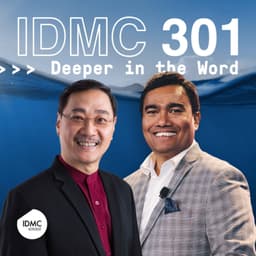
 Paul Jeyachandran

Comments
Keep it kind. Comments are public.