Skip to content The Real Meaning of Jehovah Aug 28 · 6 min ...more
The Real Meaning of Jehovah
August 28, 2026 · 6 min
Discover the powerful biblical roots behind Jehovah Jireh and learn how the God who sees your everyday needs is faithful to provide healing, peace, and total provision.
Series Shabbat Shalom Video
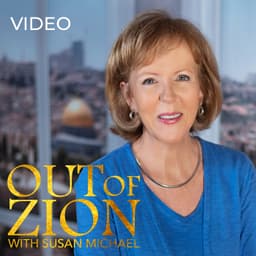
Embark on a transformative journey through the Bible and the Land of Israel with Dr. Susan Michael, President of the International Christian Embassy Jerusalem
August 28, 2026 · 6 min · Shabbat Shalom Video
Discover the powerful biblical roots behind Jehovah Jireh and learn how the God who sees your everyday needs is faithful to provide healing, peace, and total provision. ...more Show the full description Show less Discover the powerful biblical roots behind Jehovah Jireh and learn how the God who sees your everyday needs is faithful to provide healing, peace, and total provision.
Series Shabbat Shalom Video Support this leader Liking this video? Support this ministry.
Support this leader
Liking this video? Support this ministry.
Give
Support this leader Liking this video? Support this ministry.
Comments No comments yet. Start the conversation.
In this video 0:00 Introduction to Jehovah Names of God2:31 Jehovah Jireh and Jehovah Rapha4:23 Jehovah Mekoddishkem and Jehovah Shalom
Introduction to Jehovah Names of God 0:02 Well, are you asking God for some need in your life? Maybe it's financial or a relationship or healing or a miracle you need. Well, I have good news0:14 for you. So welcome to this week's Shabbat Shalom devotional when I seek to share just a little inspiration, bring a little peace to the close of your very busy week. You know, many of the0:26 titles or descriptive names of God we've been talking about are derivatives of the conjunction with the name El for GodElohim, El Shaddai, El Elyon,0:38 El Olam. But there are another set of titles of God that are based on His name, the name, that tetragrammaton that we don't really know how to pronounce.0:50 And in some translations, the name has been translated into English as Jehovah. I want to explain how that happened. So because the pronunciation1:02 of the 4 letters in the tetragrammaton was lost, it was replaced by the name of Adonai for Lord. And so at some point the scribes1:14 began. They took the consonance of the tetragrammaton. The fact that they don't have the vowels is why they don't know how to pronounce it. And they put on top of it1:26 the vowels of the name Adonai, and out of that came the word in English as we pronounce it as Jehovah. Now in1:38 Hebrew, the j would be a j, but in Greek and in English, it's a j. So we pronounce it as Jehovah. So today I'm going to1:50 use that pronunciation of Jehovah in these conjunctive names of God. The 1st 1 is Jehovah Jireh. Well, most of you have probably heard that
2:01 name. I'll tell you that in Hebrew, Jireh is pronounced Yireh. This name for God is only used once in the Bible, but
2:13 yet many of us have heard it, maybe because of the song that made it popular. But to know that God is our provider, which is what it means. And it's used the 1 time it's used
2:25 is in Genesis 22, the story where Abraham took Isaac up onto the mountain in order to obey God in offering Isaac as a sacrifice. And,
Jehovah Jireh and Jehovah Rapha
2:37 God stopped him, and he said, God will provide. And God did provide a ram in the thicket. And so he dedicated, the altar to the name, the
2:49 Lord will provide. Now I want to point out that the Hebrew word Yirei is actually based on the same Hebrew
3:00 root as roi. So the God who sees, El roi, is the God who provides, yirei. It's the same root word. So the
3:12 connotation is that God is so close He sees you, but He doesn't just see you and ignore you. He sees you, and He will provide what you need. Isn't that
3:24 beautiful? Now another name is Jehovah Rapha, the Lord who heals. We read this in Exodus 15 26. Throughout the Old Testament,
3:35 the concept of healing is used both for physical healing of disease sin, because there's an
3:47 overlap. There's a connection. Sin leads to sickness in the soul, which can lead to sickness in the body. So the word crosses over
3:59 here. And in Isaiah 53, which it talks about that by His stripes we are healed, healing there has been interpreted in the New Testament
4:11 in both ways, 1 verse about that it's healing for the body and the other verse in that it is healing from sin, the God who heals. Then there is Jehovah
Jehovah Mekoddishkem and Jehovah Shalom
4:25 Mekkodesh, or you might pronounce it Mekkodesh, but in Hebrew it's Mekkodesh. The Lord who sanctifies, He makes holy. God makes it clear
4:37 that He alone, not the law, not our obedience, can cleanse His people and make them holy. And then there's Jehovah Shalom, the Lord our
4:49 peace. Isn't that beautiful? Judges 6 24 uses this. Now once again, the connotation of peace is twofold. We think of peace as a
5:01 beautiful state of calm and relaxation, which it is. But for God's people in the Old which it is. But for God's people in the Old Testament, peace meant peace from war with your
5:12 enemies. And so He is the God who provides all that you need. He's the God who has provided for your forgiveness
5:24 from sin and your sanctification. He provides for your spiritual and physical healing. Our Our God is the God of peace. Whatever you need, just take a
5:36 little break this weekend and come before Him and watch as He heals and transforms your life 1 step at a time. And great peace awaits
5:48 you. And with that, I wish you Shabbat Shalom.
5:54 We hope you have enjoyed this episode of Out of Zion with Susan Michael. Be sure to subscribe to Out of Zion now on Apple Podcasts, Spotify, YouTube, pray dot
6:05 com, Salem 1 Place, Salem Life Audio. Out of Zion with Susan Michael is a production of ICEJ USA. All rights reserved.

 Dr. Susan Michael74.2K followers



Comments
Keep it kind. Comments are public.