Skip to content Redemption Jun 3 · 41 min ...more
Redemption
June 3, 2026 · 41 min
The book of Ruth brings ordinary people and our extraordinary God together, revealing a story of redemption! One of the most beautiful stories in the Bible is the story of Ruth. Join Pastor Colin as he talks about what a redeemer is.
Ruth 4:1-11
Series Ordinary People, Extraordinary God Ordinary People, Extraordinary God
The book of Ruth brings ordinary people and our extraordinary God together, revealing a story of redemption! One of the most beautiful stories in the Bible is the story of Ruth. Join Pastor Colin as he talks about what a redeemer is. Ruth 4:1-11 ...more Show the full description Show less The book of Ruth brings ordinary people and our extraordinary God together, revealing a story of redemption! One of the most beautiful stories in the Bible is the story of Ruth. Join Pastor Colin as he talks about what a redeemer is.
Ruth 4:1-11
Series Ordinary People, Extraordinary God
Comments No comments yet. Start the conversation.
In this video 0:00 The Redeemer in Ruth's Story26:13 Jesus Christ: Our Redeemer
2:07 the period immediately after God's people came into the promised land and in those early days, God's people did not know the joys of eternal life in the
2:19 way that we do today. There were, of course, glimpses of the resurrection and of life in the presence of God in the Old Testament. I mean, Job
2:30 says, though worms destroy this body, yet in my flesh I shall see God. David said in Psalm 23, I will dwell in the house of the
2:42 Lord forever. Asaph says in Psalm 73, you guide me with your counsel, and afterward, you will bring me to glory. Yes. There were glimpses. Most of
2:54 them come later in the Old Testament, and at best, they are only glimpses. Little glimpses of the light that would shine when Jesus came into the
3:06 world. It was Jesus Christ who brought life and immortality to light through the gospel. In these earlier days in the
3:18 Old Testament, believers hoped that 2 things would continue after they died. First, they hoped that their inheritance
3:29 would continue, and when they came into the promised land, each family was given a portion of land that became their home and became their sustenance. This land
3:41 was their inheritance. And when a man died, he would pass the inheritance on to his son. A father could say to his son, well now, son,
3:53 I'm going to die, but our inheritance will remain. When I go, the land will be yours, and when your time is done, you're gonna pass it on to
4:05 your son. The land is our inheritance. That's what will continue from generation to generation. So no 1 in the Old Testament wanted
4:17 to lose their inheritance, and God made a special provision in the Old Testament law to keep land that had been given
4:29 to a particular family within that family circle. You find it in Leviticus in chapter 25 where we read that in all the country you possess,
4:41 you shall allow, notice the word, a redemption of the land. And here's how it was to work. If your brother becomes poor and sells part of his
4:52 property, then his nearest redeemer shall come and redeem what his brother has sold. So you see the word 3 times there
5:04 in that 1, in these 2 verses. If you came on hard times and you needed to sell your land, well, your great hope was that
5:16 someone within your wider family circle would be able and willing to buy the land and thereby to keep it within the extended family, and a family member who did that was
5:28 called a redeemer. So, Old Testament believers had this hope that their inheritance would continue. And, of course, the other side of that was that they hoped
5:40 that their family line would continue. So, if you had a son, well, your son would bear your name and your name would continue. Your son would continue
5:52 the family, and the family line would continue. And if your name continued and if your family line, continued, there was a sense
6:03 in which you, sort of, continued too. So, continuing the family line was of huge importance in the Old Testament. No 1 wanted their
6:15 family line or their family name to come to an end. And so, again, God made a provision within the Old Testament law to continue
6:28 a family where a husband had died without a son, And that provision is in Deuteronomy in chapter 25 where we read that if brothers dwell together
6:40 and 1 of them dies and has no son, the wife of the dead man shall not be married outside the family to a stranger.
6:52 Her husband's brother shall go in to her and take her as his wife and perform the duty of a husband's brother to her. And the first son
7:04 whom she bears shall succeed to the name of his dead brother, that his name may not be blotted out of
7:16 Israel. Now clearly there had to be consent on the part of the widow for this to happen,
7:28 and you see, that may very well be why Ruth proposed marriage to Boaz and not the other way around. Because, you see, when
7:40 Ruth proposed marriage to Boaz, what she was doing was she was invoking this law from Deuteronomy in chapter 25. She said, spread your wings over your servant
7:52 for you are a redeemer. You're a redeemer and I'm asking you to be the redeemer for this family.
8:04 Buy Naomi's land to secure this family's inheritance, and marry me, she was saying, so that we can raise a son to continue the line of Elimelech
8:16 and to continue the line of Mahlon. And, far from being offended, when Ruth makes this proposal to Boaz, Boaz commends
8:28 her for her proposal. He says, chapter 3 and verse 10, May you be blessed by the Lord, my daughter. You have made this last kindness greater
8:40 than the first in that you have not gone after young men, whether rich or poor. Now, you see what Boaz is saying to Ruth at this point. He's
8:52 saying, you have the most amazing commitment of love to this family. It is extraordinary. Your first kindness, he refers to here, was, of
9:04 course, Ruth's loving, loyal commitment to care for Naomi, her mother-in-law, rather than to go back to her own country. That was an amazing kindness, your first kindness. But now he says
9:16 this last kindness is even greater. What's the last kindness? It's your loyal commitment to stay within this family, to raise, a child in the name of
9:27 Malon, your deceased husband, so that your inherit his inheritance would not be lost and so that his family line would continue. You've not gone after some younger man from some other
9:39 family. You have been so committed to this family. And this last kindness, he says, is even greater than the first. So
9:51 to understand this story, you have to grasp that the ultimate disaster for 1 of God's people in the Old Testament would have been to lose their inheritance
10:03 and for their name to be blotted out. And do you see that in this story it seemed like these 2 disasters, these twin disasters had merged?
10:16 Without a son, Naomi would have no alternative but to sell the land. And that, of course, would give Ruth and Naomi enough money to live on for the rest of their
10:27 lives. But it would, of course, mean the end of the inheritance, and it would be the end of the family line unless
10:41 someone was willing to redeem. Now, if we were to put the role of a redeemer in the
10:53 form of a job description, it would look something like this. The position is to be a redeemer. The responsibilities of being a redeemer are
11:05 to bring hope by restoring an inheritance and raising a family. Now, what qualifications would
11:17 a person need if they were to act as a redeemer and to fulfill this very wonderful function? Well, there are 2 qualifications that emerge very
11:29 clearly from this story and shine a light into the coming of our Lord Jesus Christ. The first is that to qualify as a redeemer, you, of course, had
11:41 to be a family member. A redeemer had to be a member of the same family. Why? Because the whole point was it was to keep the inheritance within
11:52 the family. It was to purchase the inheritance on behalf of the family. It was then to raise up a continuing family so that the
12:04 line would go on. Clearly, only a member of the same family could do that. And so, right from the beginning of the story,
12:16 the primary question is, is there anyone in Elimelech's extended family who could possibly act as the redeemer for
12:27 Naomi and for Ruth? Was there a member of the extended family who could buy the land? Was there anyone who could continue the line of Elimelech
12:39 and of Malon by marrying Ruth? And you see, that is why Naomi was so excited when on that first day after gleaning in the fields,
12:51 Ruth came back and told her whose field she had been gleaning in. She said, I've been gleaning in the field of a man by the name of Boaz.
13:04 And Naomi says, chapter 2 in verse 20, this man's a relative of ours. He is 1 of our redeemers,
13:17 chapter 2 in verse 20. And you see, the very first thing we're told about Boaz when he's introduced to the story at the beginning of chapter 2, right there in verse 1, the first thing we're
13:29 told about him was that he was a family member because that's the most important thing. Now, Naomi had a relative, chapter 2 and verse 1, of her husband, a worthy man of the clan
13:41 of Elimelech whose name was Boaz. And when Naomi counsels Ruth to take the risky initiative of faith that we looked at last week, she
13:53 gives this reason. She says, Is not Boaz our relative? He's in the position to act as our redeemer. That's why you should take an initiative of faith and go and ask him.
14:06 Being a relative qualified Boaz to act as a redeemer. And so in chapter 3 and verse 9, as we saw last time, Ruth asks him,
14:19 spread your wings over your servant for you are a redeemer. Boaz, you're in the position to
14:31 do this. You belong to the clan of Elimelech. You're a member of this family. Be our
14:44 redeemer. That's what she's asking. But there was a second qualification for being a redeemer and that's what comes out especially
14:55 in the verses that were read for us today in chapter 4. Qualifications to be a redeemer: 1, you must be a family member. 2,
15:08 You must be willing. You must be willing to do whatever it takes to redeem this family irrespective of the cost.
15:21 Now we know that Boaz was willing, indeed that he was eager to marry Ruth. He said chapter 3 and verse 11, and now my daughter do not fear I will do for you all that you ask.
15:34 But what we discover in this chapter is that there was another relative who had a prior right to purchase the land and the law
15:46 required that the nearer relative be given the first opportunity to redeem. So in chapter 3 in verse 12, Boaz said to Ruth, and now it is true that I
15:58 am a Redeemer, yet there is a Redeemer nearer than I. Remain tonight and in the morning, if He will redeem you, good, let Him do
16:09 it, but if He's not willing to redeem you, then as the Lord lives, I will redeem you. So
16:21 the first right of buying this property, the first right of redeeming belonged to the nearest relative, but if he
16:33 was unwilling, it would pass to the next in line. Now, 1 of the very striking features of this story
16:46 is how deeply committed both Boaz and Ruth were to honoring the law of God. I don't want you to miss this because it runs right throughout the story.
16:58 This is why Ruth proposed marriage to Boaz, an older man, and didn't choose to run after someone younger in another family because
17:10 living in the Old Testament times, she wanted to honor the law of God in Deuteronomy in chapter 25. This was why Ruth
17:22 and Boaz, as we saw last time, chose to wait rather than to become man and wife on that night under the stars of the threshing floor. Wanted to honor the law
17:34 of God, and this is why in chapter 4, Boaz met with the nearer relative at the city gate. In the
17:46 days of the judges in which they lived, some of you will remember the Bible says repeatedly, these were days in which everyone did what was right in their own eyes.
17:59 Sound familiar? But you see, in days when everyone did what was right in their own eyes, here are 2 people who really want to honor the law of God,
18:11 and they just shine like bright lights in a dark sky. Ruth and Boaz want to live under the blessing of God.
18:24 And because they want to live under the blessing of God, they want to honor the law of God even if that were to get in the way of their love for each other, which is clearly the
18:36 danger in what Boaz is doing in chapter 4. The nearer relative was qualified to redeem by virtue of being a family member. But the
18:48 question in chapter 4 is, would he be willing? That's the question. Because a redeemer has not only to be a member of the same family, he has to be
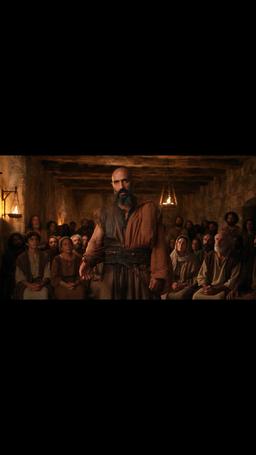
18:59 willing to pay the price. So we're told, chapter 4 and verse 1, that Boaz went to the city gate and he sat down. City gate was where legal agreements were reached and where
19:11 business transactions were done. And when the nearer relative came by, Boaz asked him to sit down and then Boaz gathered 10 elders who would act as witnesses and make sure that this
19:23 was a proper legal proceeding that took place at the city gate. They all sat down and Boaz then explained the opportunity. Chapter 4 verse 3. Naomi,
19:35 who has come back from the country of Moab, is selling the parcel of land that belonged to our relative Elimelech. And then, in front of the 10 elders
19:47 and the witnesses, Boaz invited this nearer relative to buy the land. And the nearer relative said, verse 4,
20:00 I will redeem it. And you read that and everyone goes, oh no, this is not what is supposed to happen. You can
20:11 understand why he was willing to buy the field. Remember, there is no son to continue Elimelech's family line.
20:24 So if the unnamed relative buys the field, then when he dies it becomes part of his estate. He passes on more
20:36 to his son than he had received. This is a winning proposition. If he invests in buying this field, he will reap the profits
20:48 from every year's harvest, and when he dies, he will pass it on to his son because there's no 1 else to pass it on to. And all he has to do, the only cost that's
20:59 associated with this after he buys the field is that he has to provide care and support for Naomi, the aging widow. That's easy. That's easy. And then Boaz says, verse
21:11 5, the day you buy the field from the hand of Naomi, you also acquire Ruth the Moabite, the widow of the dead, in order
21:23 to perpetuate the name of the dead in his inheritance. Now you see, the buying of the land and marrying
21:35 Ruth were tied together because the very reason for the land being sold was that there was no son. And so, if a relative was to act as a
21:46 redeemer for this family, they had not a single responsibility of buying the land, but a double responsibility. A responsibility to secure the inheritance
21:58 and a responsibility to continue the family line. And, of course, when Boaz says that, that changes everything. Because now,
22:11 the cost to this unnamed relative is not simply to provide for Naomi, not simply to provide for Ruth, but to raise a child
22:23 who will continue the line of Malon, and that child will become the 1 who will inherit the land in the end.
22:35 So the unnamed redeemer says, I cannot redeem it for myself, lest I impair my own inheritance.
22:49 Boy, acting as the redeemer here would really cost me. I can't do it.
23:03 Now, here's a man who has an opportunity to help another branch of his own family. He's able to do it,
23:15 but he's not willing. And the reason he's not willing is that his first concern is his own inheritance. That's what he says. I cannot
23:27 redeem it for myself, lest I impair my own inheritance. Now, it's very striking to me
23:40 that we don't know the name of this near relative. Here's a man who, by his own words here, wanted to build up
23:52 his own name, his own family, and his own inheritance. That was the thing that was most important to him, and it is as if his name has been blotted out altogether.
24:07 Boaz made a costly commitment to raise up the name of someone else, to continue the line of someone else. He married Ruth to continue the line of Malon, and God has seen to it that we all know the name of Boaz.
24:19 Jesus said, whoever exalts himself will be humbled. Whoever humbles himself
24:31 will be exalted. So here's Boaz and he is ready, and he is able, and he is willing to do all that is needed to redeem this family. He's
24:43 a family member. He's able to purchase the inheritance. He's more than willing to commit himself in marriage to Ruth. In verse 7, this
24:55 unnamed relative, forgotten in history, takes off his sandal and gives it to Boaz. In doing that, he
25:07 was giving up his right ever to walk on the land. That was the significance of it. And then, well, then we have the wedding bells at last. Verse 9, then
25:18 Boaz said to the elders and to all the people, you are witnesses this day that I have bought from the hand of Naomi all that belonged to Elimelech, all that belonged to Chilion
25:30 and to Malon also. Ruth, the Moabite, the widow of Malon, I have bought to be my wife, to perpetuate the name of the dead in his inheritance, that the name of the dead may not be cut
25:42 off from among his brothers and from the gate of his native place. You are witnesses this day. So we have elders, we have witnesses, we have the removing
25:54 of the sandal, a kind of ancient equivalent of signatures on documents. Ruth the Moabite is now married to Boaz. She has legal standing as 1 of the
26:06 people of God in the town of Bethlehem. Now, why is this story in the Bible?Show more





Comments
Keep it kind. Comments are public.