Skip to content NRB 2022 Interview With Dr Richard P Klucznik Dec 5 · 29 min ...more
Support this leader Liking this video? Support this ministry.
Support this leader
Liking this video? Support this ministry.
Give
Support this leader Liking this video? Support this ministry.
56.8K followers
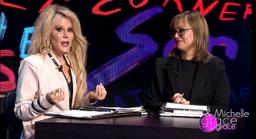
Nina and Michelle, are best friends with a passion for the Lord. They bring uplifting conversations, encouragement, and shared personal stories of overcoming and victory straight to your screen.
56.8K followers
Comments No comments yet. Start the conversation.
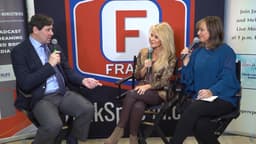
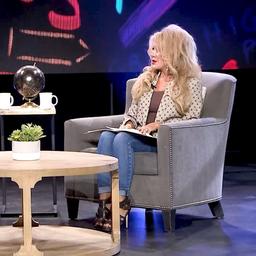
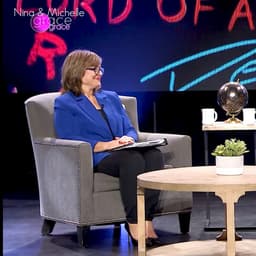
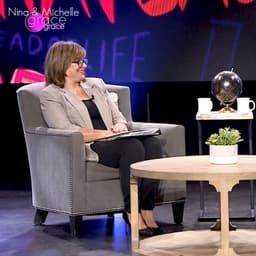
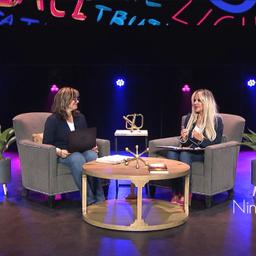
The Power of Prayer and Modern Medicine 0:02 We wanna honor God because He sees everything.0:10 You were born with a plan and a purpose. He's the God of all things possible. He's the God of all0:22 miracles.0:54 Welcome to Grace Grace with Naina Michelle at NRB. We are currently on Frank Speech live, and so what an honor to to be on the program today.1:06 I'm Michelle Humphries.1:07 And I am Naina Keegan. We are so grateful. We just love Horizon Media Studios, Overcomer's TV, and Frank Speech. And today, we have a wonderful guest. He just happens to be my husband. It is1:19 doctor Richard Klesnick. And, you know, we all know that there's waiting rooms all over the world with people who are praying for loved ones who are in surgery or who are in the1:30 hospital. And we all know that God also uses physicians when people need help, and and and God answers prayers through the hands of skilled physicians. Amen.1:42 And and today, we have 1 of the nation's top docs. We're not just saying that because he's not Naina's husband, but he really is 1 of the nation's top docs. He1:54 is the, president of the Society for Neurointerventional Surgery. He which is, a For the whole nation. For the entire nation. And he also works for2:06 1 of the biggest and largest, cutting edge hospitals in America. And so, doctor Richard Klesnick, we are we so welcome you to the2:17 program. We're so grateful for you. And do you know that Richard, doctor Richard Klesnick, has worked on over 30000 patients,2:30 and he is a doctor that will pray with his patients and has just saved so many lives. So welcome to our broadcast live. We2:41 appreciate you being here. Now you are an expert, the leading expert on strokes in America. Tell us what it what are the signs of stroke, and what2:53 is the impact of stroke? Yes.2:55 First of all, what is a stroke?2:56 Well, first of all, a stroke is is 2 types of stroke, but a stroke is anything that's affecting the blood supply or affecting the brain. The the first type of stroke that we deal with mostly is we call it a bland stroke.3:08 That's when a clot breaks free from either the heart, sometimes from the leg, and it goes through the heart or from the vessels down in the neck and goes up into the brain and blocks flow. That's a stroke. That's a blood3:19 clot that we try to go and get out. The other type of, stroke is a hemorrhagic stroke, which is caused from a vascular problem of the brain, aneurysms that rupture, arteriovenous malformations, or vascular problems3:31 that rupture. The in the well, actually, there's been lots of cutting edge things that have happened in the last 30 years or so. Just to give you an example, most aneurysms of the brain 30,3:44 35 years ago were basically were operated on. They cut your head open. They took out a piece of skull. They they lifted up their brain. They put a clip on it. Well, now most aneurysms in this country now are done3:56 by what we do. It's minimally invasive techniques. We go inside the blood vessels and go up and fill it with either platinum coils or fancy stents. So we get take care of it from going inside the brain so you don't have4:07 to open the skull as we we kind of say, funningly, laughingly, once air touches the brain, it's never the same. So you don't really want to have to all crack the head open if you can avoid4:19 cracking the head open. Well But the biggest advance has been in in stroke therapy in the last, say, 8, 9 years where there were new devices that came out and new technologies. And4:31 then studies came out that we can go inside blood vessels and grab the clot or suck the clot. There's actually a catheter. It's like a vacuum cleaner. Mhmm. So either 1 of these devices came in, and you can grab it or4:42 suck the clot out. And that just changed everything at that moment. And now we're able to get to people who are having strokes within 6 hours, and you can reverse the stroke. Even if you don't reverse it, you can4:53 actually get it to a point where they can recover from the stroke where they couldn't do it before.4:57 Well, what you're go ahead.4:59 Oh, then also recovering from a major surgery of cutting open the the skull and the head. And imagine the recovery time on that. And there's it's just a minimal recovery time, is5:11 it not, for what you're doing?5:12 For an aneurysm. Yeah. For an aneurysm of the brain that I treat, they can go home the next day. Whereas, if you have to have surgery, you're we're in the hospital a week, 10 days or more. And then we've for regular5:24 strokes that we can get the clot out, we've changed it. Now stroke is the number 1 leading cause of death and disability in the country, even to this day. And now it's disability, because the stroke5:36 can lead to long term nursing care. Families have to take care of patients. Everybody, I think, knows or has family members that have strokes and Right. They can't move, they can't talk, they can't feed themselves. And5:47 we've changed that so much now that patients are going home, and they're not ending up in long term facilities anymore. They're recovering faster. They're recovering better than we ever could before.5:58 The world needs to be reached with the message of Jesus. And that is the mission of Grace Grace with Nina and Michelle. To see people's lives change with the saving power of Jesus Christ.6:10 When you donate to Grace Grace ministries, you're also reaching orphans and the underprivileged throughout the world, as well as the United States. The Bible says that when we help the least, the forgotten and the6:21 overlooked, we have done something for Jesus himself. Will you be a part of what God is doing to help those in need and those who are hungry to hear the real message of Jesus? Give today by6:33 logging on to nainaandmichelle dot com or text the word give to 3 2 5 6 0 3 3 3 5 4. You can also send in a check to 6315 B FM 14 886:45 Road, number 122, Magnolia, Texas 77 3 5 4. Grace Grace Ministries is a 5 0 1 c 3 charitable organization. Gifts are tax deductible, so join us in the great commission6:57 today. Give now.7:00 So what are the signs that someone is having a stroke that loved ones should look for? Because at the point where someone is having a stroke, they cannot7:11 communicate any longer. So what are the signs?7:15 We, we teach everybody and family members and we do teaching across the country too is to remember this simple word, fast. Fast, f a s t. Face, because if you're talking to a7:27 loved 1 or when you're looking at them and their face begins to droop or you see changes in their eye or side of the face drooping, that's a that's a sign of a stroke.7:35 Mhmm.7:36 We say arm because they're they're weak. If simple little things, like you notice they may not be able to pick up a coffee cup normally or a glass. They can't pick up a glass and take a sip. That's a sign. And then7:47 strength, again, arm or length. You may be walking with them, and they may be all of a sudden, they're going off to a side, or they're they're they can't keep up and they're weak, their legs. And then, of course, time,7:57 because time is brain. Every minute that, the blood supply is not to the brain, millions of neurons are dying. We we are encouraging people to to check on their loved ones more on the8:09 phone because, you know, you may not be seeing them, but call them. And if they're not answering the phone, that tells you something. But if they're talking like you say, they're on the phone and they're starting to8:20 speak gibberish, then8:21 call 9 1 1. Immediately, when those things are happening, what should they do?8:25 Well, of course, you have to call 9 1 1. And we have been working as a society, and we're working with another, we hired a program called Get Ahead of Stroke. Get Ahead of Stroke.8:38 And even the last few years, we have been going to Washington, DC, and then I make the trip with, the board of directors of the society. And we actually go talk to senators and congressmen,8:49 and we do it state by we do have to do it state by state because you can't do it federal. We're changing the laws. Because right now, as you said, if an ambulance picks you up, they'll bring you to the closest hospital.9:01 Right.9:01 We're teaching and trying to teach all the emergency medical technicians, all the EMTs across the country to learn the signs of a stroke, and then make it law that if you think it's a stroke, you bypass the9:13 closest place.9:14 Right.9:14 And we have a system and a network of comprehensive strokes similar to what we have for level 1 trauma center. As everybody knows if you're in a bad accident and the helicopter comes, they're not taking you to the local9:25 place. They're taking you to the level 1 trauma center. Right. So we're working basically with all the societies and and legislatures to make it law that ambulances have to go to a comprehensive or primary9:37 strokes comprehensive strokes and a level 1 stroke center rather than the closest place so they can get the treatment that we offer is to get that clot out.9:45 The world needs to be reached with the message of Jesus. And that is the mission of Grace Grace with Nina and Michelle, to see people's lives change with the saving power of Jesus Christ.9:57 When you donate to Grace Grace ministries, you're also reaching orphans and the underprivileged throughout the world, as well as the United States. The Bible says that when we help the least, the forgotten and the10:09 overlooked, we have done something for Jesus himself. Will you be a part of what God is doing to help those in need and those who are hungry to hear the real message of Jesus? Give today by logging10:20 on to nainaandmichelle dot com or text the word give to 3 2 5 6 0 3 3 3 5 4. You can also send in a check to 63 15 b FM 14 88 road10:32 number 1 22 Magnolia, Texas 77354. Grace Grace ministries is a 5 0 1 c 3 charitable organization. Gifts are tax deductible, so join us in the great commission today.10:44 Give now.10:47 What what are some things that people can do to prevent stroke?10:53 It's the kind of the simple things in life, you know, don't smoke, Don't10:58 drink. Yeah.10:59 A lot of it is diet. We we say the bible belt in the south, but it's actually probably the worst diet in the whole entire country is in the south.11:07 Yeah. That's11:08 true. We're in Texas, and we love barbecue, but it's it's probably not the greatest thing to be eating a whole bunch of barbecue.11:14 Deep fried.11:14 Deep fried. You eat seafood.11:15 We like fresh onion.11:17 Diet. Take care of yourself. If you have high blood pressure, make see you're being seen by a doctor. Diabetes is a big 1. Diabetes causes stroke. So all of those are simple things to do to try to prevent and try to stay11:28 healthy. Exercise, be healthy. Simple common sense kind of things. And, you did mention, COVID. What we found out in the in the COVID pandemic is that COVID causes strokes.11:41 We saw an increase in strokes because COVID causes problems with bleeding. It causes hypercoagulant, which means it causes thrombus formation. We first found that So clots. In the lungs. Clots. Clots11:53 in the lungs, and we start seeing clots in other clots and other parts of the brain that we don't normally see clots, and then strokes. The incidence of strokes went way up during the COVID pandemic just because it it is12:05 a disease that thought that's that seems to form clot.12:08 Doesn't your heart, like, having an irregular heartbeat, throat clot, and cause cause that too? I know you've talked about that different times. Like12:16 Yes. 1 of the big causes of stroke is atrial fibrillation. Your heart, especially the atria of your heart. When you say fibrillation, they're kind of not really beating in sync. They're kind of just kind of doing this12:27 with your hand, like a seizure of, and that because there's no regular beat, clot can form. And And when the clot forms in the on the heart, it's got no place else to go. The first thing that shoots off from the heart12:39 is the brain. It it doesn't even go down to the legs or it can, but the first place is upstream to the brain. So atrial fibrillation, clot problems, any kind of problem with a rhythm of a heart. And we've12:51 been finding that patients have been coming in now because we're seeing more in the pandemic with COVID too. The people who have not had diagnosis of heart problems, these are new problems that they hadn't13:03 been seen by a doctor. They hadn't been diagnosed with atrial fibrillation. But all of a sudden, they come into the emergency room, they come up to see us, and our heart is in irregular rhythm. So it is a big thing, for13:14 for strokes.13:15 And also, isn't there, I know that when you were talking with Pat Robertson, wasn't there something to do with, like, if you're on some kind of blood thinners, if you take that regularly, and13:27 then if you stop that, there's there's there's, like, a more of a chance of a stroke?13:34 Yes. Yeah. We we13:35 normally drugs.13:36 Any kind of blood thinners that people want. Some people are on blood thinners for their heart. And, I I just know of even people that are on, anybody's got a stent anywhere in their body. A lot of heart13:48 stents out there. So stents in the heart or legs, kidneys, they they all they belong on, dual antiplatelet. So they belong on blood thinners. Aspirin, Plavix is the common drug.14:00 And we know that people just suddenly don't feel like taking it anymore. And they come next if if it's other problems, but they're coming into the emergency room and we're seeing them because now they have a stroke14:12 because they stopped taking the drug. And a lot of times it's also cost.14:17 And see, that's very important because a lot of people might just think, oh, I'm fine now because my blood pressure is fine. And they they don't really even realize that by taking that up, that causes your blood that's14:28 been running thin to be thicker now that's gonna throw clots.14:33 That's correct.14:33 So, you know, that is so important to make sure that if you are on something like that, that you what? Unless you are doctor supervised or replacing that drug with something or whatever the14:45 case may be to not go off of that. Correct.14:47 Yes. So 1 1 thing I love about doctor Klesnick is that he is a man of God. And, like I said at the at the beginning of the program, you know,14:59 he has worked on 30000 patients, around 30000 patients. So tell us a time when the lord you just had to call on the lord because you didn't know15:11 what to do and it worked out.15:15 Well, I'll give you sort of my own little journey. I was raised Catholic. So previously, when patients would say, can we pray with you and stuff, I'd be like, no. No.15:27 But once I was saved, then I when patients now ask me, and and especially families will say, can we pray with you? Then I'm I'm happy to then. I will join join in then.15:40 And I do say every time now, before I work on a patient, I say a tiny little prayer to myself. God, Jesus, please guide my hands. Please let me help this patient. And, and there are15:52 times when I'm in a procedure and something has gone wrong. You can have complications. Yeah. The vessels in the head aren't the strongest things in the world. Mhmm. Bone. God gave you bone to cover it, protect them. You16:02 don't have muscle anymore. So if you're trying to go up and get a clot, you can poke a hole.16:06 I know many times you'll text me. I have a very difficult case on the table. You know, please please, you know, say say prayers and we'll stand in agreement. And I know that you've said so many times that, you know, this16:17 was a very difficult many, many of these people are extremely unhealthy. Many of them are very old. And so you are, you know, you there's so many factors weighing in16:29 on what you're doing. And when you you've said so many times, like, I wasn't you know, I was worried about what was gonna happen. And then you'll you'll say that you've prayed and that, like, things16:41 started to turn around, and we'll pray for a patient in recovery, and they'll just get better. And, you know, you've really we've we've you've shared so many stories with me. But, you know, what are16:53 what are some of the stories where, like, maybe you've met with a family afterwards and, you know, that was praying and stuff. I know you have a lot of those, like, where somebody was so thankful.17:05 Well, again, just just like I I sort of mentioned, you know, I run into trouble, and I immediately start praying, and God help me out of this, and and something will turn around. And I I'm always honest17:17 with the families. If there's a problem, I go out and talk to them. And I find that if you talk to the family and you tell them the truth and don't try to hide anything, they're more they're happier with17:29 anything that happens. But then, you know, I've had them where I thought the patient may end up really dying, and it turns out they didn't. And they turned the17:41 corner and healed later, and now it's they were saved. And, the family is happy and and glad because their loved 1Preventing and Recognizing Strokes 17:53 who was in trouble made it through.17:56 Yeah. So you have seen firsthand prayer working in the operating room.18:04 Yes.18:05 Yes. That's amazing that and you're a man of science and a man of faith, and sometimes people think that they cannot mix, but it it only makes sense that they do.18:16 Yes. It does.18:17 Some of the, the issues are coming with younger people. You're seeing some younger people with strokes now too, which didn't really have health issues. They're not elderly, and it's really coming from the18:29 the the clots and the issues from the from the strokes and some from of those different things. And even some of the issues from the vaccines that you've seen happen too. So what what is18:40 what are some of those things like? Because people might not be looking at a young person and saying, I think they're having a stroke. That wouldn't be very typical. But you also do a lot of aneurysms and things like18:52 that. So what are some of those signs, and what maybe are you seeing with some of the younger people?18:58 Well, for the for the the aneurysms, those are like a blister, a bubble on a blood vessel. Again, your blood vessels are weak in the head because they don't have muscle anymore. So smoking,19:10 diabetes, high blood pressure, that constant pulsing on a blood vessel can lead to a a blister forming, like a bubble on a tire. And, those tend to happen in middle19:22 aged or older patients. So that was very unusual to see them in kids. And again, with the the treatment is to go inside and fill it with coils, metal.19:34 Basically, make a ball of yarn inside of something, make it stronger. We do know that there is incidence of myocarditis young in young kids, and that incidence is higher than we've ever seen19:45 before.19:46 Which is an inflammation of the heart. Right?19:48 Of the heart. And we're thinking that may be related to the virus, to the vaccines and the boosters because there's nothing to explain why we're seeing young kids with heart problems that we never saw before, higher19:58 incidence. And, of course, if you have a heart problem and then that leads to a rhythm problem, well, then you can have other problems like strokes. Never mind just a heart attack and the problem with that, and then20:08 congestive failure. And if you're a young person whose heart is failing, then, you know, that takes years off your life. You're you're now living with a heart that's older than your rest of your body. So we don't wanna20:20 get too far into all of that because we don't have all the data yet, but there's there's some thought processes about that.20:27 Now when it comes to, you know, you hear people doctors say take an aspirin. Does that work for strokes? Or so an aspirin a day really does keep the doctor away?20:38 It can. Yes. Yeah? Yeah. It it thins your blood a little bit. So an aspirin especially for your heart, really, more your heart than your brain, but all blood vessels that are small, and aspirin does actually does help.20:49 And it's a baby aspirin, a small aspirin, not not a regular aspirin. Just the baby 80 milligrams. 81 milligrams. The baby. The bare baby aspirin.20:56 So when someone is having a stroke and now we know if they're having a heart attack, maybe give them an aspirin then. But what about stroke?21:05 Not for stroke.21:06 That's a no because of the bleeding. Yes. Yes.21:08 And, you don't want the the aspirin works on certain kind of parts of the cascade for blood thinning, and it's actually a detriment to what we21:20 do when we have to go get clot out. Because if we stir up bleeding, then it's it's gonna be worse if you're on aspirin. The heart, again, can take it because it's got muscle. So it's rare to kinda poke a hole through a21:32 heart vessel. You can put a stent and but the the brain, the vessels take they they don't like it. They don't take a beating very well. So you don't wanna be on a blood thinner if you don't have to do.21:42 Okay. So now before we were talking about that if you're on a blood thinner and you go off, that is a, you know, big red flag for people who are having can can cause a stroke. So does it work the same21:54 way with aspirin? Like if21:55 you No. Because aspirin is a smaller kind of we're talking about the prescription blood thinners that doctors put you on. The the Xarelto's, the coat the Coumadin, the, you know, Warfarins, the Plavix,22:07 Berlintas, the stronger ones that doctors prescribe.22:10 What is something that the audience can do now for their overall brain health?22:18 Be active every single day and do anything you can to keep your brain moving as you especially as you get older. I mean, you can do anything, puzzles, anything that keeps your brain constantly the the worst thing22:30 you don't wanna do is just sit down and watch TV. You wanna keep your brain functioning. So anything that will Unless22:35 you wanna watch Jeopardy.22:36 Unless you wanna watch Jeopardy. The castle or sudoku or puzzles or there's anything like that that your your brain has to solve our problem is is what your brain needs.22:47 Keep learning because your brain22:48 Keep learning.22:49 Keep reading.22:50 Reading, learning anything.22:51 Read the word God. Memorize scriptures. Keep your brain going and keep yourself healthy that way. Now always learn something new. Right? They say, you know I remember when my kids used to come home from school and be23:01 like, what did you learn today? Nothing. You know, they would always say nothing. But it's like, maybe try to learn something every day. Maybe a scripture because that's gonna keep your brain active too.23:11 There's 1 other new kind of thing that we have for stroke right now that's coming into fruition is is called a mobile stroke ambulance. So now there are ambulances that actually have a CAT scanner on them.23:22 Oh, wow.23:22 So instead of going to get a patient and trying to make a diagnosis of a stroke and bringing them back to an emergency room and then putting them in a scanner to see if there's bleeding or whatever, this the scanner23:32 comes to them. So23:33 Awesome.23:34 The call goes out. They go to the house. They put the patient in the ambulance, scan the patient. You make the diagnosis. The images come back to the medical center, and then you go from there. So it saves time that way.23:45 Mobile stroke scanners are are coming.23:47 And now how soon are those coming?23:49 They're here. There's 1 in Houston right now.23:51 Wow. Okay. So are those you know, are are there plans that you know of to get those, like, nationwide?23:57 Yes. Yeah. Cleveland, most of the largest cities have a mobile ambulance. I know some cities in Germany have mobile stroke ambulances.24:06 Wow. Just amazing information, isn't it?24:09 Yes. It is. And it's cutting edge. And, you know, everybody needs to think about their brain health. Right?Show more In this video 0:02 The Power of Prayer and Modern Medicine17:50 Preventing and Recognizing Strokes24:12 Faith and Science: A Harmonious Relationship


Comments
Keep it kind. Comments are public.