Faith & Wisdom
Psalm 23 Meaning, Line by Line
A line-by-line walk through Psalm 23, from the shepherd and still waters to the dark valley and the table, with the shepherd details behind each picture.

PRAY.COM
Published · 8 min read
Share this
Key takeaways
- The heading reads "A Psalm by David," and David knew sheep.
- The King James Version reads "I shall not want," and the WEB says "I shall lack nothing.
- Sheep don't lie down when they're hungry, afraid or bothered by flies, so a resting flock is a well-cared-for flock.
- The Hebrew phrase behind "still waters" means something like "waters of rest.
- "Restores" can mean "brings back," and the picture fits a straying sheep that the shepherd goes out to find.

New prayers every day, read aloud so you can pray along.
- Morning
- Pray Daily
- Midday
- Pray Midday
- Night
- Pray Nightly
Free, and millions of people already pray with Pray.com.
Psalm 23 means that God personally cares for his people the way a good shepherd cares for his sheep: he provides, he leads, he stays close in the darkest places, and he brings them safely home. David wrote it as a short song of trust, six verses long, and it has been read at bedsides and gravesides for centuries. The Psalm 23 meaning opens up when you take it one line at a time, because almost every phrase carries a picture from a shepherd's working life. This guide walks through each line in order.
Marilyn Hickey teaches through the psalm with her daughter Sarah in "7 I Am's of Psalm 23, Part 1," an episode of her Daily Program on Pray.com that you can watch above. She reads the psalm in the present tense, as a description of who God is today: "He doesn't say I will be. He says I am." All Scripture below is from the World English Bible (WEB), which pray.com hosts. Where the WEB wording differs from the familiar King James lines, both are noted.
Who wrote Psalm 23, and why a shepherd?
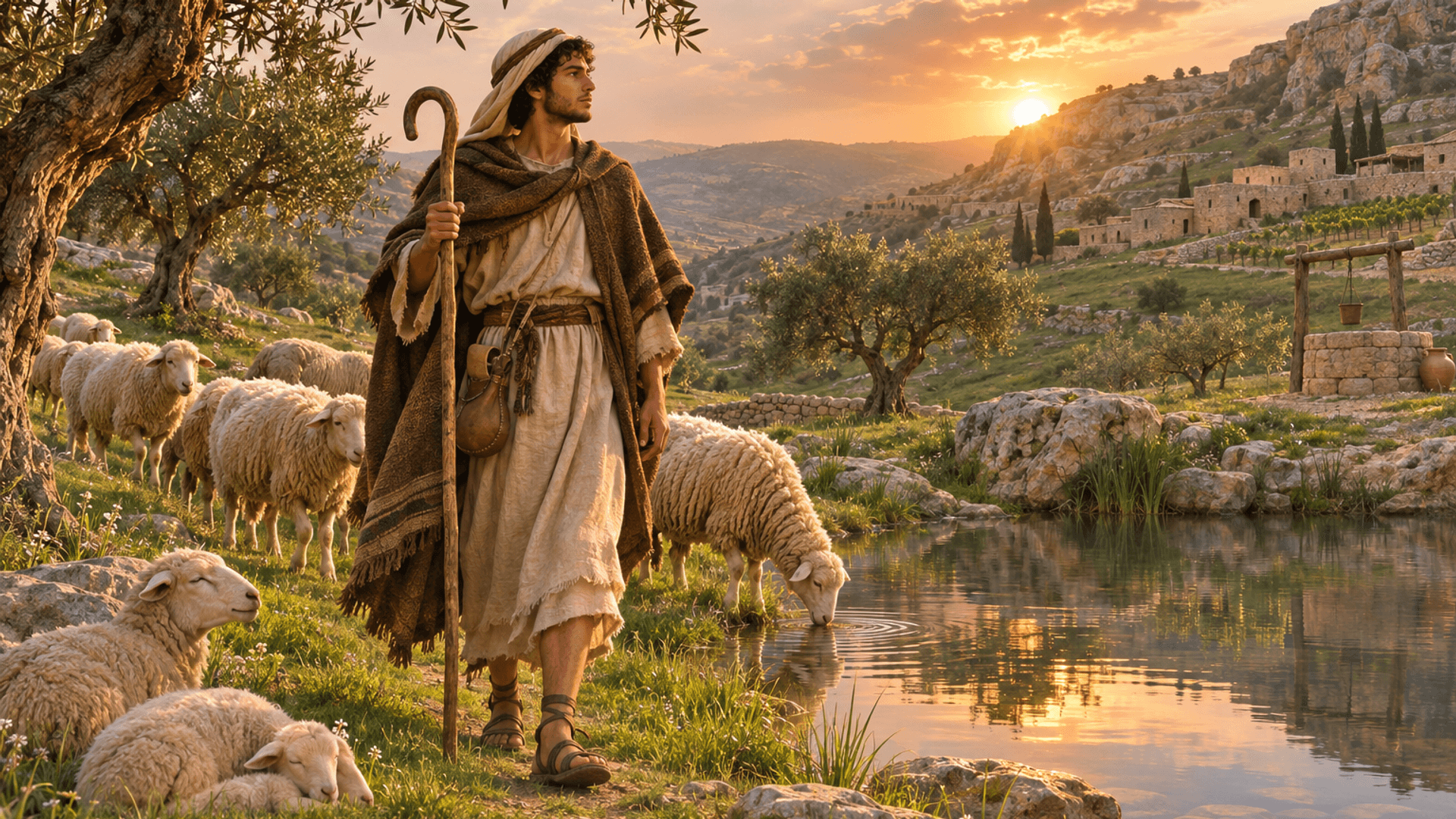
The heading reads "A Psalm by David," and David knew sheep. Before he was king, he was the youngest son sent out to the fields near Bethlehem, and he later told Saul about fighting off a lion and a bear to protect the flock (1 Samuel 17:34-35). When he calls God his shepherd, he is drawing on years of hard, unglamorous work. In the ancient Near East, "shepherd" was also a common title for kings. So the psalm says something bold. The king of Israel is telling his people that he himself is one of the sheep, and that the LORD is the one actually caring for him.
Advertisement
"The LORD is my shepherd"
"The LORD is my shepherd; I shall lack nothing."Psalm 23:1, WEB
The Hebrew behind this line gives one of the names Hickey teaches on, Jehovah Rohi, "the LORD my shepherd."
The word "my" is the surprise. David doesn't say the LORD is Israel's shepherd, though that is true too. He speaks of a personal bond with one sheep.
Sarah draws the line straight to Jesus, who called himself "the good shepherd" and said he "lays down his life for the sheep" (John 10:11, WEB). In John 10, the shepherd "calls his own sheep by name and leads them out" (John 10:3, WEB).
Her application is simple: "Jesus knows your name and he calls you by name."
"I shall lack nothing"
The King James Version reads "I shall not want," and the WEB says "I shall lack nothing." Both mean that a sheep under this shepherd has what it needs. The line describes contentment with what the shepherd gives. It doesn't promise everything a person might want. Israel heard the same words about the forty years in the desert: "These forty years, the LORD your God has been with you. You have lacked nothing" (Deuteronomy 2:7, WEB).
"He makes me lie down in green pastures"
"He makes me lie down in green pastures. He leads me beside still waters."Psalm 23:2, WEB
Sheep don't lie down when they're hungry, afraid or bothered by flies, so a resting flock is a well-cared-for flock. In the dry hills of Judea, green pasture was rarely found by accident. A shepherd had to know where it was and lead the sheep there. The verb "makes" suggests that sometimes God has to insist on rest for people who would otherwise keep going.
Advertisement
"He leads me beside still waters"
The Hebrew phrase behind "still waters" means something like "waters of rest." Sheep are nervous around fast streams, and a good shepherd leads them to calm pools where they can drink. Jesus gives a similar invitation to tired people: "Come to me, all you who labor and are heavily burdened, and I will give you rest" (Matthew 11:28, WEB).
"He restores my soul"
"He restores my soul. He guides me in the paths of righteousness for his name's sake."Psalm 23:3, WEB
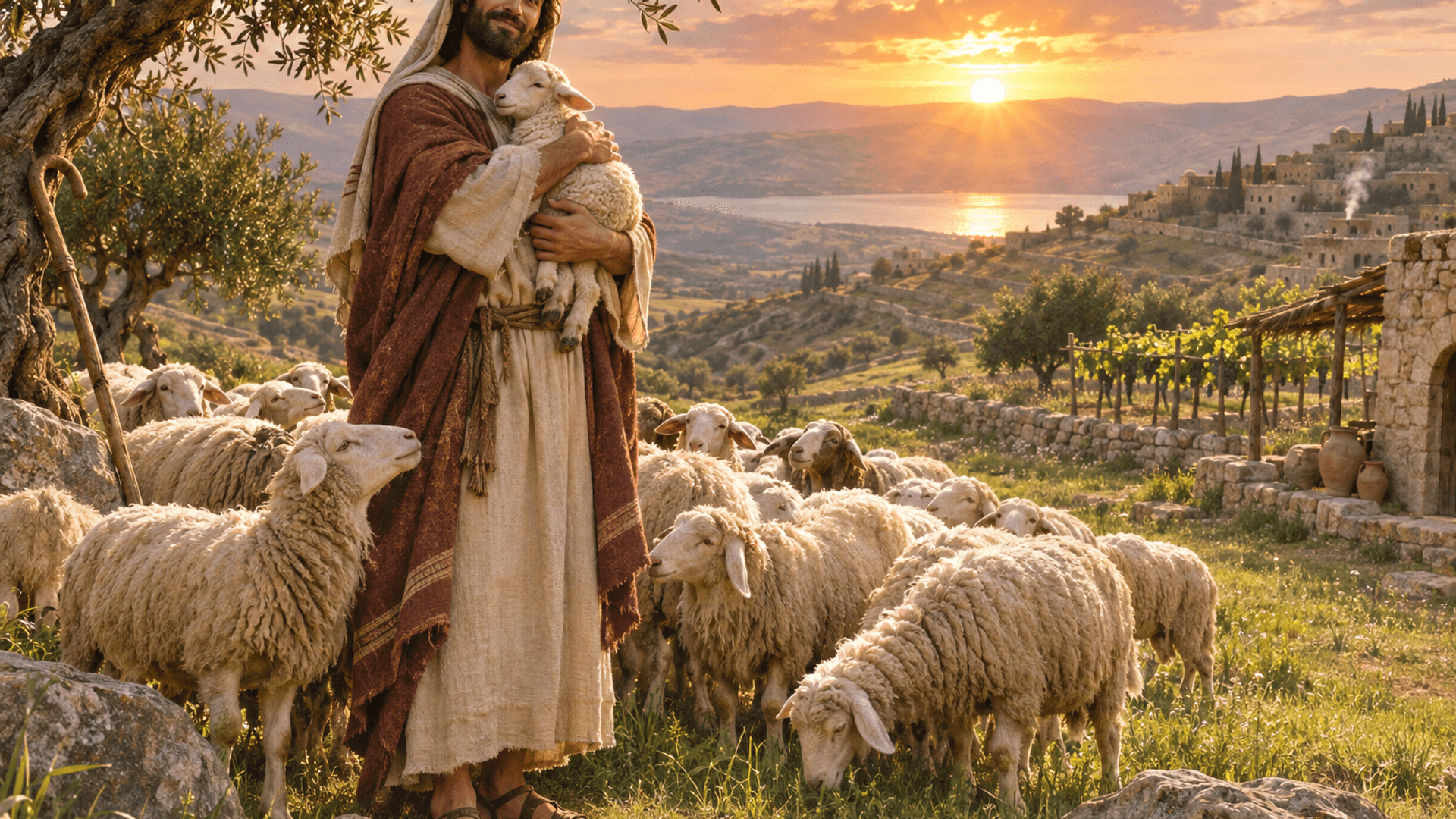
"Restores" can mean "brings back," and the picture fits a straying sheep that the shepherd goes out to find. Jesus told a parable about exactly that: when the shepherd finds the lost sheep, "he carries it on his shoulders, rejoicing" (Luke 15:5, WEB). Restoration in this psalm is something God does for you when you are worn out or wandering, and it begins with him coming after you.
"He guides me in the paths of righteousness for his name's sake"
"Paths of righteousness" can also be read as "right paths," the tracks that actually lead somewhere safe. The reason God guides is "for his name's sake," which means his own reputation is tied to how his sheep end up. That's a strong reason for confidence, since God's faithfulness to his people is bound up with his own character. Sarah puts the sheep's part in one line: "Jesus leads you, but the idea is that you follow."
- Pray with us todayToday's prayer
"Even though I walk through the valley of the shadow of death"
"Even though I walk through the valley of the shadow of death, I will fear no evil, for you are with me. Your rod and your staff, they comfort me."Psalm 23:4, WEB
The Hebrew word translated "shadow of death" can also mean "deep darkness." The Judean wilderness has narrow ravines that fall into shadow long before sunset, and a shepherd sometimes had to lead the flock through them to reach the next pasture. The psalm says "through," which means the valley has another side. This verse also changes how David speaks. Until now he has talked about God ("he makes me," "he leads me"). In the dark valley he starts talking to God: "you are with me." The closer the danger, the closer the language gets.
"Your rod and your staff, they comfort me"
A shepherd carried two tools. The rod was a short club for driving off wild animals. The staff was a long, often hooked pole for guiding sheep and pulling them out of tight spots. One protects and the other directs, and David finds comfort in both. For sheep in a dark ravine, the tap of the staff was a reminder that the shepherd was right there. Peter later called Jesus "the Shepherd and Overseer of your souls" (1 Peter 2:25, WEB), a title that combines the protection of the rod with the guidance of the staff in one person who knows each sheep and will not leave it alone in the dark.
"You prepare a table before me in the presence of my enemies"
"You prepare a table before me in the presence of my enemies. You anoint my head with oil. My cup runs over."Psalm 23:5, WEB
Many readers see the image shift here from shepherd to host. In the ancient world, a host who welcomed you to his table was bound to protect you while you were under his roof. David pictures God setting out a meal while his enemies can only watch. The enemies are still real, and they can't touch the guest.
Advertisement
"You anoint my head with oil. My cup runs over"
Anointing a guest's head with oil was a sign of honor and welcome, the way Jesus noted that a good host would do for a guest (Luke 7:46). Shepherds also put oil on sheep's heads to soothe cuts and keep insects away, so the line works in both pictures. "My cup runs over" means the host keeps pouring, past the brim. It's a picture of generosity that goes beyond what was needed.
"Surely goodness and loving kindness shall follow me"
"Surely goodness and loving kindness shall follow me all the days of my life, and I will dwell in the LORD's house forever."Psalm 23:6, WEB
The King James Version says "goodness and mercy." The WEB's "loving kindness" translates hesed, God's loyal, covenant love. The verb translated "follow" usually means "pursue" or "chase" in Hebrew. In other psalms enemies pursue David, and here God's goodness and love run after him instead, every day of his life.
"I will dwell in the LORD's house forever"
The psalm ends at home. For David, the LORD's house meant the place of worship in Jerusalem, and another psalm says he wanted nothing more than to "dwell in the LORD's house all the days of my life" (Psalm 27:4, WEB). Christians have long read this last line as a promise that reaches past death, which is why Psalm 23 is read at so many funerals. Revelation ends with the same shepherd picture: "the Lamb who is in the middle of the throne shepherds them and leads them to springs of life-giving waters" (Revelation 7:17, WEB).
How to pray Psalm 23
Hickey's suggestion in the episode is to use the psalm as a daily prayer pattern, and her point about its present tense is a good place to start: "Faith is present tense." Try praying one line each morning for a week, starting with "The LORD is my shepherd" on day one. Turn each line into a sentence to God about today, such as "You are with me in this hospital waiting room" or "Lead me to rest this afternoon." By the end of the week you will have prayed the whole psalm, a line at a time.
For more on the psalms of trust, Pray.com has a line-by-line look at Psalm 91 and a collection of Bible verses about comfort.
A prayer from Psalm 23
Lord, you are my shepherd, and I have what I need in you. Lead me to rest when I'm tired and bring me back when I wander. When I walk through a dark valley, stay close enough that I can feel your staff. Let your goodness and your loving kindness follow me today, and bring me home to your house at the end. Amen.
More to read and hear on Pray.com
- 7 I Am's of Psalm 23, Part 1 | Marilyn Hickey, Daily Program
- Psalm 23 | Sleep Psalms with Bishop T.D. Jakes
- Psalm 91 Meaning
- Bible Verses About Comfort
- Prayer for Someone Who Lost a Loved One
AI-assisted from Pray.com episode transcripts, then reviewed and approved by Ryan Beck.
Advertisement
- Pray with us todayToday's prayer
Hear the Bible read aloud and follow series from pastors like Jack Graham.
Create a free accountFree to use. Going ad-free is optional.
Keep reading
 Romans 8:28 Meaning: "All Things Work Together for Good"Faith & Wisdom · 6 min read
 Eternal Security: What the Bible Says About "Once Saved, Always Saved"Faith & Wisdom · 10 min read
 Life Hacks From Proverbs: 12 Pieces of Old Wisdom That Still WorkFaith & Wisdom · 6 min read
- Daniel Fast Food List and Rules, With Daily ScripturesFaith & Wisdom · 7 min read
- Bible in a Year Reading Plan for 2027Faith & Wisdom · 6 min read
- Philippians 4:6-7 Meaning: "Do Not Be Anxious About Anything"Faith & Wisdom · 7 min read
- Identity in Christ: Bible Verses on Your Security in Who God Says You AreFaith & Wisdom · 9 min read
- Who Was Esther in the Bible?Faith & Wisdom · 8 min read
- Who Was Elijah in the Bible?Faith & Wisdom · 9 min read
- Who Was Pontius Pilate?Faith & Wisdom · 8 min read