Healing & Well-Being
5 Mindfulness Exercises To Connect With God
You may have heard of the practice of mindfulness, the non-judgmental recognition of the present moment, and its many benefits.
By PRAY.COM Editorial Team · Published · Updated · 5 min read
Share this
Key takeaways
- Mindfulness is a psychological state of being that can improve the mental health of those who practice it.
- Mindfulness demonstrates a number of benefits in different areas.
- We all feel stress as a part of existing in this busy world.
- Many people report that mindfulness practice enhances focus, attention, and decision-making.
- Practicing mindfulness can help you decrease aggression and foster a more positive mindset, which leads to healthier relationships with family, romantic partners, and even God.

You may have heard of the practice of mindfulness, the non-judgmental recognition of the present moment, and its many benefits.
For a technique that receives praise for its numerous mental benefits, many forget that it has roots in spiritual rituals and practices. You will find various forms of mindfulness practices in the Buddhist, Islamic, and indeed Christian faiths.
Accordingly, you can use mindfulness activities to enhance your connection with God and the Holy Spirit.
To find out where mindfulness and the Christian faith meet, we’ve put together a list of five faith-based mindfulness practices that you can try.
What is mindfulness?
Mindfulness is a psychological state of being that can improve the mental health of those who practice it.
The concept derives from Buddhist traditions and thought, specifically from Sati, which means ‘to remember’ or ‘to bear in mind’ in Sanskrit.
It’s akin to meditation — however, mindfulness is more of a state of consciousness rather than a prescribed set of actions like guided meditation, which itself is a technique that can bring about a state of mindfulness.
The practice of mindfulness typically involves centering your attention on whatever is occurring in the present moment in a focused, non-judgmental way. Everyone has moments where their mind wanders on autopilot, and mindfulness is a great way to reel in your attention again.
There are many ways to create a state of mindfulness, with the goal being to carry it with you in everyday life in order to experience as little stress as possible.
It's particularly useful for those suffering from mental health disorders such as anxiety and depression. However, even those without such conditions can engage with mindfulness as a simple way of experiencing more mindful awareness and appreciation for daily life.
Benefits of mindfulness
Mindfulness demonstrates a number of benefits in different areas.
Reduced stress
We all feel stress as a part of existing in this busy world. Research on a range of mindfulness techniques for controlling PTSD, a stress disorder, demonstrated significant effects.
And, mindfulness is not only an effective stress-reduction technique for those struggling with mental health disorders but for anyone who wants to approach life with a more relaxed state of mind.

Increased focus and decision-making
Many people report that mindfulness practice enhances focus, attention, and decision-making. Some teachers have introduced mindfulness programs to their classrooms in order to increase focus among their students.
Better relationships
Practicing mindfulness can help you decrease aggression and foster a more positive mindset, which leads to healthier relationships with family, romantic partners, and even God.
5 mindfulness exercises for connecting with God
From the Christian perspective, the experience of mindfulness is one of God’s many gifts to us.
It can be compared to a kind of gentle bliss — the subtle awareness of the presence of God through a sense of grace and gratitude.
Engaging with these experiences is an effective way to enhance your connection with God, and you can do it through the following techniques.
1. Non-judgmental present moment awareness
This first mindfulness exercise is a general exploration of one of the core concepts of mindfulness – non-judgemental acknowledgment of the present moment.
Start by assuming a comfortable position and taking a few deep breaths. Begin to notice the things that make up your physical surroundings. Hear the sounds around you, whether it’s the tweeting of birds or the passing of cars.
It’s essential that you cast no judgments on whatever comes to your attention. Birdsong is not ‘good’ and traffic is not ‘bad’ — they are both simply there.
Continue to simply notice whatever appears for a few minutes, allowing yourself to bask in the present.
2. Physical body scan
Another technique for engaging with mindfulness is the ‘body scan.’
Like before, you should assume a comfortable position. Instead of focusing on your surroundings, give all your attention to your internal physical sensations — how your body feels. Start with your feet and work your way through your entire body.
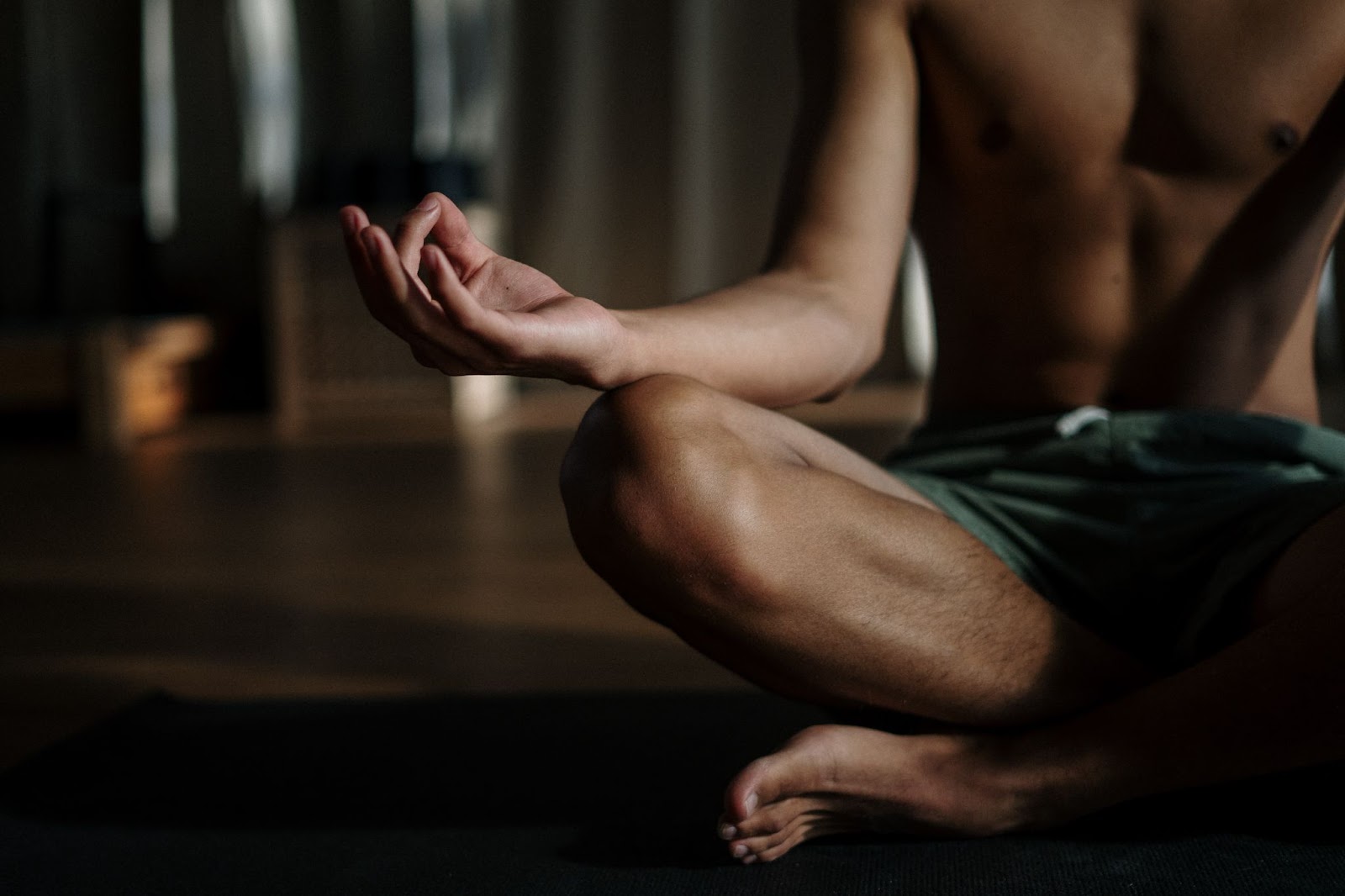
Notice what sensations are there, if any. Tickles, aches, discomfort, relaxation. Notice them all without passing judgment, taking your time to investigate exactly how your body truly feels. You should feel a renewed relationship between your consciousness and your physical body.
3. Prayers and affirmations
Now you know how it feels to fully experience the present moment — you can start bringing in elements of your faith to enhance those experiences.
Perform one of the previously described exercises for a few minutes to get into a relaxed, mindful state. Then, bring to mind your favorite short prayer or Christian affirmation. Speak it in a quiet whisper rhythmically alongside your breathing.
For example, try, “I can do all things through Christ, who strengthens me” from Philippians 4:13.
Repeat it for a minute or so, being careful not to put too much thought into its meaning or implications.
4. Bible verse reading
A less demanding method of practicing mindfulness to connect with God is simply reading the Bible.
You can combine elements of the first exercise with your Bible reading, noticing the feel of the paper in your hands, the sensations that the sacred words bring about in you, and the gentle rhythm of going from line to line, passage to passage.
5. Deep breathing
Finally, a reliable technique to induce a state of mindful well-being is a deep breathing exercise.
In deep breathing, you assume a seated position. Then you inhale, gently expanding your diaphragm to slowly capture as much air as possible. At the same pace, release the air back out. Once you find a comfortable rhythm, you continue doing this for 10 or so minutes.
The increased oxygen and focused attention given to the breath induce a relaxed state of being.
Connecting with God the mindful way
God is ever-present in our lives, even if sometimes it doesn't feel like it.
If you’re struggling with your mental health, we encourage you to try one of the many mindfulness-based stress-reduction techniques like mindful breathing, a meditation practice, or simple day-to-day mindful awareness.
Use your renewed state of mindfulness to enhance your faith by bringing in warming words from the scriptures or repeating a gentle prayer. You will hopefully be able to unlock a new way of connecting with God and the Holy Spirit.
To always stay connected to God’s word and the power of the Holy Spirit, download the pray.com app in the iOS App Store or on Google Play.
References
- pubmed.ncbi.nlm.nih.govpubmed.ncbi.nlm.nih.gov
Keep reading
- 21 Bible Verses for Depression: Find Peace and Hope for 2025Life can feel heavy. Even when we have faith, seasons of sadness and despair can leave us searching for meaning and light. But God’s Word has never changed — and His promises are still powerful today.Healing & Well-Being · 8 min read
- 12 Ways to Improve Your SleepWhat is Sleep Hygiene? Strong sleep hygiene means having both a bedroom environment and daily routines that promote consistent, uninterrupted sleep.Healing & Well-Being · 4 min read
- 17 Quotes and Bible Verses to Calm Down When Feeling AngerLearn about 17 Bible verses for anger with Pray.comHealing & Well-Being · 8 min read
- 27 Meditation Quotes To Help You Overcome StressThere's no doubt that the regular practice of mindfulness and meditation is good for your health and overall well-being.Healing & Well-Being · 8 min read
- 4 Bible Verses About Blessings Of God and How To Receive Them Many people talk of feeling or being blessed — described as an experience of gratitude, acceptance of God’s gifts, and general good fortune. But blessings don’t come from luck or chance.Healing & Well-Being · 10 min read
- 4 Comforting Bible Verses To Help You Calm Your Anxiety and FearsLearn how to calm your own anxiety through faith, prayer, and God.Healing & Well-Being · 10 min read
- 4 Effective Stress Management Techniques To Help You RelaxStress has a critical function. We respond to threats more quickly and avoid danger when we are under stress.Healing & Well-Being · 6 min read
- 5 Comforting Prayers For Salvation of the Deceased and DyingLearn about different prayers for the deceased and dying with Pray.comHealing & Well-Being · 8 min read
- 6 Simple Ways To Practice Gratitude Daily A lot of disciplines make their way to the forefront of Christian discussions regarding how to become more like Jesus. The majority of them revolve around such things as prayer, Bible reading, and fellowship with others. What gets overlooked too often is developing a sense of gratitude within our daily practices. Gratitude is powerful, and it can make your life better in so many ways. It’s quite difficult to feel sad or sorry for yourself when you are feeling gratitude.Healing & Well-Being · 8 min read
- Meditation On Anxiety: A Guide To Calm Your MindAnxiety in the modern world is a troubling phenomenon that seems to be growing with each year that passes. The tension and unpredictability of the current global climate seem to be the major contributing factor.Healing & Well-Being · 5 min read