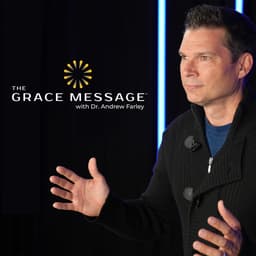
Grace Anatomy: What If You're Not the Problem?
Oct 4 · 39 min
 Andrew Farley588K followers
October 4, 2026 · 39 min · The Grace Message with Dr. Andrew Farley
...more Show the full descriptionShow less
What If You're Not the Problem? What if you're not your own worst enemy? In this message, Andrew explores your spiritual anatomy: spirit, soul, and body. Discover why your old self wasn't improved but replaced, why sinful thoughts and feelings don't define you, and how your soul can reflect the truth already planted within you. You are one spirit with the Lord, fully embraced by God, and righteous even while your mind is being renewed. You're not the problem. Discussion Questions: Read 1 Thessalonians 5:23 and 1 Corinthians 6:17. What do these verses tell us about the way God sees your whole person (spirit, soul, and body) and why is it important to stop viewing any part of yourself as inherently bad? Read Romans 8:16 and 1 Corinthians 2:11. What makes your spirit different from your soul and body, and how can knowing that your spirit is joined to the Lord give you confidence about your true identity? Read Romans 12:2, Philippians 4:7, and James 1:21. If your soul includes your mind, choices, and emotions, what do these passages show about how the soul learns, grows, and is renewed without becoming the basis of your righteousness or identity? Read Hebrews 4:12, Matthew 11:29, and Hebrews 6:19. What do these passages reveal about the soul, and how can they help us reject the idea that the soul itself is evil rather than something God loves, preserves, and ministers to? Read Romans 12:1 and 1 Corinthians 6:19–20. How does God describe your physical body, and how would believing that your body is holy, acceptable, and a dwelling place of God change the way you think about yourself physically? Read Romans 6:12–13 and 1 Corinthians 6:15. If your body belongs to Christ and can be presented as an instrument of righteousness, what does that tell us about the difference between your body itself and the sin that sometimes tries to operate through it? Read 1 Peter 2:11, Romans 6:12–13, and Romans 8:9. Where does Scripture locate the real conflict in the Christian life, and how does it help to recognize that your enemies are sin, fleshly influences, the world, and the devil (not your spirit, your soul, or your body)?
SeriesThe Grace Message with Dr. Andrew FarleySupport Andrew Farley's ministry
Give once or monthly. Your gift goes to the ministry.
Monthly supporters also enjoy Pray.com ad-free.
Get the Pray app