Faith & Wisdom
The Ten Commandments List: Its Meaning and Importance
Discover the scripture behind the Ten Commandments.
By PRAY.COM Editorial Team · Published · Updated · 9 min read
Share this
Key takeaways
- The Ten Commandments, or the “decalogue” as they are sometimes known, appear twice in the Hebrew Bible, in Exodus and Deuteronomy 5.
- When reflecting on the fourth commandment, we remember that God created the world in six days and used the "seventh day" to rest.
- As the parental role is divine in Christian doctrine, this fifth commandment is given to ensure one’s parents are obeyed when commands are given that don’t violate the other commandments.
- The sixth commandment prohibits killing or murder as a moral imperative.
- The seventh commandment outlaws committing adultery.
It’s hard to overstate the importance of the Ten Commandments.
In only ten short sentences, God offers us a foundational guideline to appropriate moral behavior that's still adhered to in most Christian traditions today.
These commandments have shaped what it means to be a worshipping Christian, and from them, we’re able to live according to the divine word of God and make the appropriate choices in our lives when we encounter moral dilemmas.
Lesser known, however, is the biblical origin of the Ten Commandments, the ethical basis for each one, and the various distinctions that people make across the spectrum of Christianity.
Join us as we explore these ideas, starting with the origin of the Ten Commandments in the Bible.
Where are the 10 commandments in the Bible?
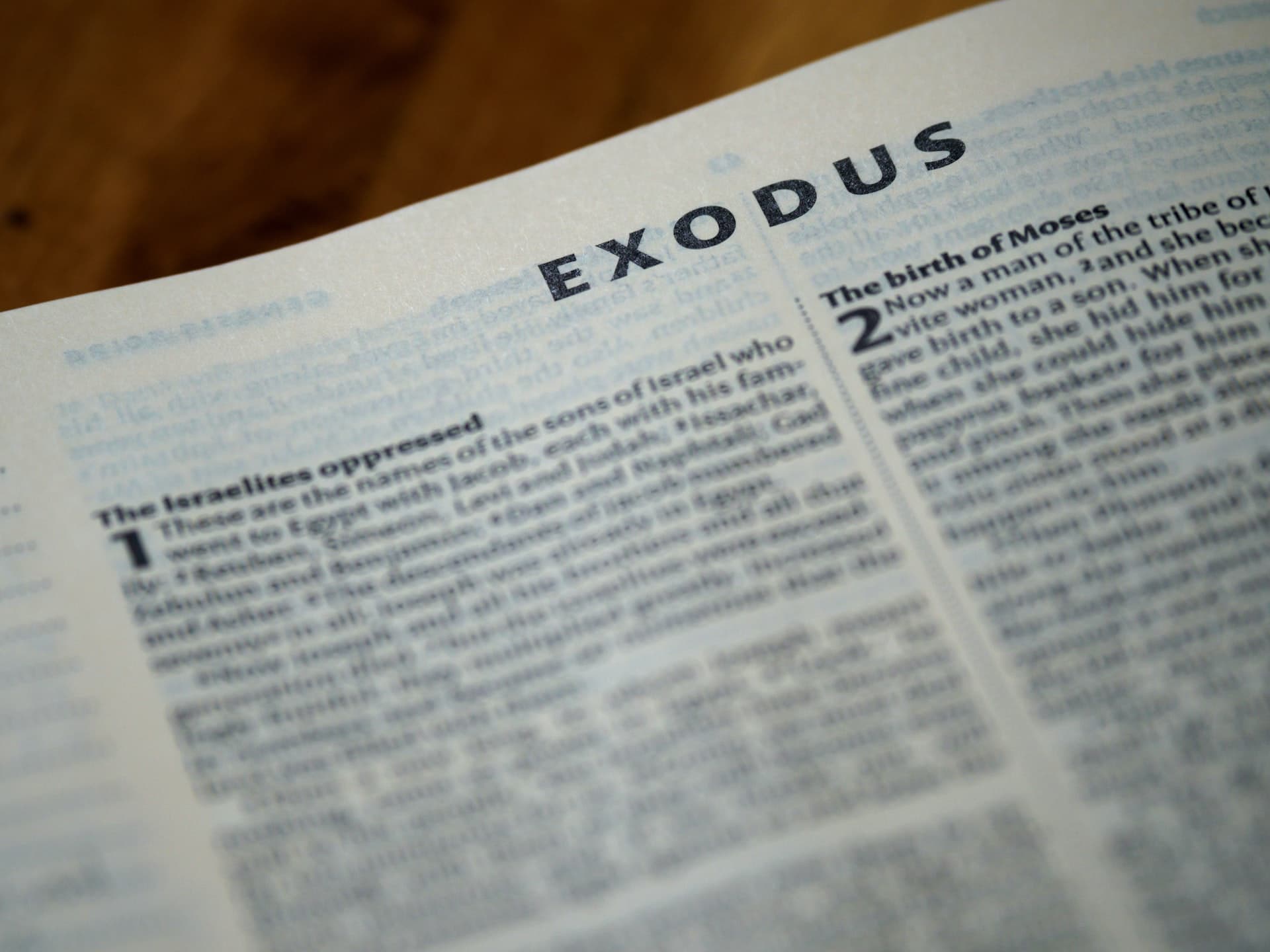
The Ten Commandments, or the “decalogue” as they are sometimes known, appear twice in the Hebrew Bible, in Exodus and Deuteronomy 5.
The narrative begins in Exodus 19, where Moses, the leader of the Israelites, is led up Mount Sinai by God. The Lord said to Moses: “I am going to come to you in a dense cloud, in order that the people may hear when I speak with you and so trust you ever after” (Exodus 19:9).
He was instructed to warn people not to ascend the mountain to see the Lord, for it would be wrapped in a cloud of dense, fiery smoke, and the people would surely perish.
After three days of preparation, there were “thunders and lightnings, and a thick cloud upon the mount, and the voice of the trumpet exceeding loud" (Exodus 19:16). Moses led a crowd of people to the base of the mount where the noise was emanating.
Then, amid the increasingly loud noise of trumpets and a thick darkness, God addressed the crowd of people with these words: “I am the Lord your God, who brought you out of the land of Egypt, out of the house of slavery,” (Exodus 20:2).

He went on to list off ten sacred commandments for the people to follow.
Later in Exodus 24, the Lord called Moses to the mount again. This time, He provided two tablets of stone with the ten commandments written out to teach the people of Israel.
List of the 10 commandments and their meaning
The list of the ten commandments which the Lord spoke of are as follows:
1. I am the Lord thy God: thou shalt not have strange gods before me
This is central to all the Abrahamic religions. It states that worshippers should not follow any other God than the Lord. Doing so is called idolatry, the historical punishment for which was death.
2. Thou shalt not make unto thee any graven image
This second commandment is similar to the first commandment. It is a rule which states that people are prohibited from creating anything with any likeness to “anything that is in heaven above” (Exodus 20:4). Many quote this as “You shall not make idols.”
3. Thou shalt not take the name of the Lord thy God in vain
This third commandment prohibits blaspheming, which is the inappropriate use of the Lord’s name or using His name to commit evil acts.
4. Remember the sabbath day, to keep it holy
When reflecting on the fourth commandment, we remember that God created the world in six days and used the "seventh day" to rest. Accordingly, He commands us to do the same, keeping the ‘Sabbath’ day (Sunday) holy by not performing any work.
5. Honor thy father and thy mother
As the parental role is divine in Christian doctrine, this fifth commandment is given to ensure one’s parents are obeyed when commands are given that don’t violate the other commandments.
6. Thou shalt not kill
The sixth commandment prohibits killing or murder as a moral imperative.
7. Thou shalt not commit adultery
The seventh commandment outlaws committing adultery. We define adultery as marital infidelity. To put this in modern terms, you are forbidden from cheating on your spouse or being unfaithful.

8. Thou shalt not steal
The eighth commandment, while initially thought to be exclusively for the theft of people as in the case of kidnapping and slavery, prohibits theft of any kind.
9. Thou shalt not bear false witness against thy neighbor
The ninth commandment upholds telling the truth in most or all cases, depending on the particular doctrine.
10 Thou shalt not covet thy neighbor’s wife or neighbor’s house
Finally, the tenth commandment merges a number of similarly themed commandments. “Thou shalt not covet” prohibits fostering a desire for another person’s relationships or possessions.
Why are the 10 commandments important?
Most traditions of Christianity hold that the Ten Commandments have divine authority, as they are explicitly stated by the Lord God Himself and further communicated by the prophet Moses.
Though the particulars of each commandment vary according to the doctrine they are communicated in (like the Jews, who consider the Sabbath day to be on Saturday and not Sunday), the impact of the Ten Commandments as a whole across the Abrahamic religions is immense.
They are considered the most concise summary of God’s word and law, which influences every aspect of a contemporary Christian’s life, including piety, worship, prayer, and tradition.
The Ten Commandments are also referenced by other important figures, including Jesus Christ in his Sermon on the Mount, where he spoke of five commandments, including the seventh and the ninth, among others in the New Testament (Matthew 19:16–19).
Paul, the apostle, also mentioned the Ten Commandments in his Epistle to the Romans. He listed the last five commandments, summarizing with the now-famous expression, “Thou shalt love thy neighbor as thyself.”
God’s word
The explicit communication of holy rules and law coming directly from the word of God is a welcome occurrence in the Bible.
It allows us to operate, without any doubt, according to God’s will and gives us the chance to practice our Christianity faithfully.
Across the Old Testament and the new, whether you are Jewish or Christian, the Ten Commandments provide the foundation on which our religious society has based its moral compass.
So, when going about your life, keep them in mind. Your adherence will be rewarded.
To always stay connected to God’s word and the power of the Holy Spirit, download the Pray.com app in the iOS App Store or on Google Play.
Quick answers
- Where are the 10 commandments in the Bible?
- The Ten Commandments, or the “decalogue” as they are sometimes known, appear twice in the Hebrew Bible, in Exodus and Deuteronomy 5. The narrative begins in Exodus 19, where Moses, the leader of the Israelites, is led up Mount Sinai by God.
- Why are the 10 commandments important?
- Most traditions of Christianity hold that the Ten Commandments have divine authority, as they are explicitly stated by the Lord God Himself and further communicated by the prophet Moses.
Keep reading
- New York Times Article: Finding God in the App StoreLauren Jackson explores the booming "faith tech" industry where tens of millions are using AI chatbots for spiritual guidance. The article examines apps like Bible Chat (30M+ downloads), Hallow, and PRAY.COM (25M downloads) that offer 24/7 digital chaplaincy services, raising questions about technology's role in religious practice.Faith & Wisdom · 6 min read
- You Have Not Because You Ask Not: Bible Verse ExplainedLearn about the meaning of James 4:1-3 with Pray.comFaith & Wisdom · 8 min read
- Meaning Of Rainbow In The Bible: Interpreting The Symbol Of HopeWhile we often associate rainbows with children's toys, their hopeful message dates back to the Book of Genesis. In this article, we want to help you understand that history better.Faith & Wisdom · 12 min read
- 10 Powerful Father's Day Prayers and BlessingsThe Power of Praying For the Dads in Your Life "A good father is one of the most unsung, unpraised, unnoticed, and yet one of the most valuable assets in our society." - Billy…Faith & Wisdom · 5 min read
- 10 Heartfelt Prayers for Friends: A Guide to Strengthening Bonds through FaithThe Power of Prayers in Friendship Friendship is a beautiful gift that enriches our lives with joy, support, and shared moments.Faith & Wisdom · 3 min read
- When Does Lent Start and End?The word Lent comes from an old English word, “lencten”, which means “spring season”. It is a time of religious observance, covering the 40 days from Ash Wednesday to Holy Thursday (Maundy Thursday).Faith & Wisdom · 6 min read
- The Beauty of Easter: A Journey of Resurrection, Redemption, and CelebrationEaster stands as a radiant celebration, echoing with profound significance in the hearts of Christians worldwide. In this article, we will thoughtfully explore the biblical origins, cherished traditions, and the immeasurable joy that Easter brings to believers.Faith & Wisdom · 3 min read
- What's Ash Wednesday? It’s Meaning and History ExplainedApart from Christmas and Easter, Ash Wednesday is one of the most attended Masses of the year for the Catholic Church.Faith & Wisdom · 6 min read
- What Happened at the Cross of Jesus?One of the most captivating stories in the Bible is the life and death of Jesus Christ. You could argue the crucifixion of Jesus is the most tragic story of them all.Faith & Wisdom · 6 min read
- Palm Sunday: Meaning, Story In The Bible, and Its Importance For ChristiansExplore the Biblical events that brought Jesus to Jerusalem as a Savior & King.Faith & Wisdom · 13 min read