Faith & Wisdom
15 Attributes Of God and Their Meaning According To The Bible
Learn about the different attributes of God with Pray.com
By PRAY.COM Editorial Team · Published · Updated · 10 min read
Share this
Key takeaways
- When people discuss God, they often refer to Him as omnipotent.
- Now that we understand the first three attributes of God, let’s go over the rest of them.
- The fact that God exists without beginning or end is the biggest challenge believers face.
- Malachi 3:6 says, “For I the Lord do not change.
- Despite our limited physical abilities, human beings have incredibly high needs.
.jpg&w=3840&q=75)
Have you ever wondered what it’s like to be God?
While humans can never know in every detail what God is like, by reading God's word, we can gain a greater insight into who He is and how He acts. Through scripture, we can learn about and summarize many traits and characteristics of God.
In this article, we’ll talk about all 15 attributes of God and their meanings.
The difference between omnipotent, omnipresent, and omniscient
When people discuss God, they often refer to Him as omnipotent. However, omnipresent and omniscient are also important attributes of God.
But what’s the difference between this trinity of words?
While these words seem similar, there are subtle differences.
First off, let’s go over the one everyone knows: omnipotent. The word omnipotent means having unlimited power and the ability to do anything. God is all-powerful and can manipulate entire universes.
Omnipresent means God is present in everything and anything. He's everywhere at all times, and there’s nowhere we can hide from His presence.

The term omniscient refers to God's knowledge of everything — He is all-knowing. He knows everything that's happened, is currently happening, or that will occur.
The holiness of God is due to these attributes. — which is perfectly summed up in the Old Testament, when Psalm 139:4 says, “Even before a word is on my tongue, behold, O Lord, you know it altogether.”
In total, God has 15 attributes that we will discuss, and these are the first three: God’s omnipotence, omniscience, and omnipresence.
Characteristics of God
Now that we understand the first three attributes of God, let’s go over the rest of them.
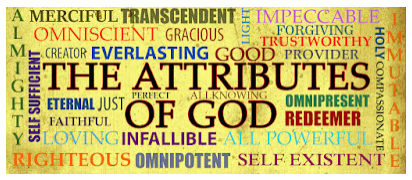
Some of God’s traits are incommunicable attributes that we cannot fully understand or articulate. But these communicable ones are attributes we can study, understand, and try to emulate in our own lives.
God is infinite
The fact that God exists without beginning or end is the biggest challenge believers face. When we attempt to grasp God's majesty and vastness, it’s as if we’re metaphorically trying to grasp a raging ocean. The Heavenly Father is always in control and always infinite.
God is immutable
Malachi 3:6 says, “For I the Lord do not change.” God doesn’t change — He is the same yesterday, today, and forever. His attributes are the same from before the beginning of time into eternity.
God is self-sufficient
Despite our limited physical abilities, human beings have incredibly high needs. God, however, has never once been in need of anything. The only reason we have self-sufficiency is because of God: “Not that we are sufficient in ourselves to claim anything as coming from us, but our sufficiency is from God” (2 Corinthians 3:5).
God is wise
Psalm 90:12 says, “So teach us to number our days so that we may get a heart of wisdom.” People who are truly wise combine skill and competence with their heart, soul, and mind.

But even the wisest person on earth would never come close to having the wisdom of God. For God is infinitely, consistently, and perfectly wise.
God is faithful
Each of God's attributes isn't an isolated trait but intertwined within the wholeness of His being. We can only understand his faithfulness when we understand His immutability. Because God remains the same, He is faithful no matter what.
God is good
In the same way that God is immutable and infinite, His goodness is unchanging. Through his goodness flows his mercy. Affirming God's goodness is often easier when times are good, which is true for many of God's other attributes. When life takes a turn for the worse, we can begin to question the goodness of God.
But even in our trials, God remains good.
God is just
God is just, but what does that mean? Being just means more than simply being fair. The sovereignty of God means He always does what's right and good for all of humanity.
Furthermore, our Lord's judgments on evil, unrepentant sinners are also just and right. The wrath of God the Almighty is powerful and swift — but it is always just.
God is merciful
God's mercy is inseparable from His justness. He's infinitely, unchangeably, and unfailingly merciful, as well as lovingly kind, toward us. He's inexhaustibly and actively compassionate. His mercy isn't deserved by us.
Through Jesus Christ, our sins were forgiven, and we were given eternal life. It is through our Savior that we can accept God’s mercy.
God is gracious
Our ability to trust in grace is because grace is an attribute of God and not just an action He performs. Grace is God's goodwill toward our sins and shortcomings. Without the grace of God, we have no merit. But with grace, God abolishes our debt through Christ.
God is loving
Our understanding of God's love is only possible when we consider his other attributes. The love of God is eternal, sovereign, unchanging, and infinite. In fact, God is love itself — under the many names of God, He's often known as love.
God is holy
Of all the attributes of God, holiness is the one that most uniquely describes Him, and it is a summation of all His other attributes.

Essentially, the word holiness describes His uniqueness, something that makes Him distinct from other beings. It indicates His complete and infinite perfection. Holiness is the attribute of God that binds all others together.
God is glorious
The glory of God is also evidently inseparable from the rest of His attributes. As such, God is unchangeably, eternally, and infinitely glorious. All of who He is and everything He does radiates beauty and glory.
Isaiah 43:7 says that man was created by God for His glory. Our whole existence and purpose are to glorify Him, as we are created in His image. We are to do the good work He's prepared for us to do.
He sees all, and He knows all
What God is like and what He isn't like is described in detail in the Bible.
An attempt to explain God's divine attributes without scripture is no better than an opinion, which is sometimes inaccurate, especially if one wants to really understand God. We must turn to the Bible to truly learn of him.
The importance of us trying to understand what the nature of God is like is vastly understated. The failure to understand God can lead to the worshipping of false gods. But when we turn to God and Jesus Christ and learn of them through scripture, we behold the wonder and divinity of the Holy Spirit.
For more about the attributes of God in the Old and New Testament, download the Pray.com app in the iOS App Store or Google Play.
Keep reading
- New York Times Article: Finding God in the App StoreLauren Jackson explores the booming "faith tech" industry where tens of millions are using AI chatbots for spiritual guidance. The article examines apps like Bible Chat (30M+ downloads), Hallow, and PRAY.COM (25M downloads) that offer 24/7 digital chaplaincy services, raising questions about technology's role in religious practice.Faith & Wisdom · 6 min read
- You Have Not Because You Ask Not: Bible Verse ExplainedLearn about the meaning of James 4:1-3 with Pray.comFaith & Wisdom · 8 min read
- Meaning Of Rainbow In The Bible: Interpreting The Symbol Of HopeWhile we often associate rainbows with children's toys, their hopeful message dates back to the Book of Genesis. In this article, we want to help you understand that history better.Faith & Wisdom · 12 min read
- 10 Powerful Father's Day Prayers and BlessingsThe Power of Praying For the Dads in Your Life "A good father is one of the most unsung, unpraised, unnoticed, and yet one of the most valuable assets in our society." - Billy…Faith & Wisdom · 5 min read
- 10 Heartfelt Prayers for Friends: A Guide to Strengthening Bonds through FaithThe Power of Prayers in Friendship Friendship is a beautiful gift that enriches our lives with joy, support, and shared moments.Faith & Wisdom · 3 min read
- When Does Lent Start and End?The word Lent comes from an old English word, “lencten”, which means “spring season”. It is a time of religious observance, covering the 40 days from Ash Wednesday to Holy Thursday (Maundy Thursday).Faith & Wisdom · 6 min read
- The Beauty of Easter: A Journey of Resurrection, Redemption, and CelebrationEaster stands as a radiant celebration, echoing with profound significance in the hearts of Christians worldwide. In this article, we will thoughtfully explore the biblical origins, cherished traditions, and the immeasurable joy that Easter brings to believers.Faith & Wisdom · 3 min read
- What's Ash Wednesday? It’s Meaning and History ExplainedApart from Christmas and Easter, Ash Wednesday is one of the most attended Masses of the year for the Catholic Church.Faith & Wisdom · 6 min read
- What Happened at the Cross of Jesus?One of the most captivating stories in the Bible is the life and death of Jesus Christ. You could argue the crucifixion of Jesus is the most tragic story of them all.Faith & Wisdom · 6 min read
- Palm Sunday: Meaning, Story In The Bible, and Its Importance For ChristiansExplore the Biblical events that brought Jesus to Jerusalem as a Savior & King.Faith & Wisdom · 13 min read